
In an era dominated by corporate intellectual property and jump-scare assembly lines, Mike Flanagan has carved out a singular reputation as American cinema’s premier emotional architect of dread. Whether adapting literary icons like Shirley Jackson, Stephen King, and Edgar Allan Poe, or penning original spiritual fables, Flanagan operates on a radical premise: horror is not about the monster in the dark; it is about the grief, guilt, and love that make us vulnerable to it.
Flanagan has also revived the classical Hollywood tradition of the repertory theater company. Much like the eccentric ensemble worlds mapped out across our ranking of every Wes Anderson film, Flanagan works with a fiercely loyal stable of performers—Carla Gugino, Kate Siegel, Rahul Kohli, Henry Thomas, Samantha Sloyan, and Bruce Greenwood—who step into radically different archetypes across each production.
With his transition from Netflix to Amazon MGM Studios and an upcoming reimagining of The Exorcist, we look back across his entire catalog. Here is every Mike Flanagan movie and TV series, ranked from good to immortal.
12. Absentia (2011)
- Type: Feature Film
- Starring: Katie Parker, Courtney Bell, Dave Levine
- The Core Theme: Ambiguous loss and the horrors beneath domestic infrastructure
Shot for a shoestring budget of just $70,000 funded largely through Kickstarter, Absentia is the gritty indie foundation upon which Flanagan built his career. The story follows a pregnant woman (Courtney Bell) preparing to declare her missing husband dead in absentia seven years after his disappearance, only for her recovering addict sister (Katie Parker) to suspect a dilapidated pedestrian tunnel near their house is responsible.
While the film bears the rough technical edges of micro-budget filmmaking, Flanagan’s signature strengths are already fully formed. Instead of relying on creature effects, the terror is built on psychological erosion, sibling guilt, and cosmic dread lurking inside ordinary urban architecture. It remains a masterclass in atmospheric minimalism.
11. The Midnight Club (2022)
- Type: 10-Episode Netflix Series
- Starring: Iman Benson, Igby Rigney, Ruth Codd, Heather Langenkamp
- The Core Theme: Terminal illness, youth, and the stories we use to survive death
Co-created with Leah Fong, The Midnight Club adapted Christopher Pike’s beloved 1994 young adult novel about eight terminally ill teenagers residing at Brightcliffe Hospice who gather at midnight to tell scary stories. The series was designed to run for multiple seasons, which ultimately hampered its pacing when Netflix cancelled it prematurely.
Despite the unresolved cliffhangers, the series contains remarkable emotional peaks. Breakout star Ruth Codd delivers a blistering, tear-streaked performance as the cynical, leg-amputee rebel Anya, and the show holds the official Guinness World Record for the most scripted jump scares in a single television episode (21 in the pilot). When focused on the intimacy of dying youths comforting one another through fable, the show achieves genuine grace.
10. Ouija: Origin of Evil (2016)
- Type: Feature Film
- Starring: Elizabeth Reaser, Lulu Wilson, Annalise Basso, Henry Thomas
- The Core Theme: Economic desperation opening the door to genuine malevolence
Taking the helm of a prequel to 2014’s universally panned Ouija sounded like a commercial suicide mission. Instead, Flanagan delivered one of modern horror’s greatest course-corrections. Set in 1967 Los Angeles, the film follows a widowed mother and her two daughters who run a staged séance scam out of their home to pay the mortgage.
Flanagan treats the material with the reverence of a classic 1970s studio chiller, complete with retro Universal title cards and cigarette-burn reel change markers. Lulu Wilson’s performance as the possessed youngest daughter is terrifyingly physical, and the film grounds its demonic possession in real working-class financial anxiety.
9. Before I Wake (2016)
- Type: Feature Film
- Starring: Kate Bosworth, Thomas Jane, Jacob Tremblay, Annabeth Gish
- The Core Theme: Somatic manifestation of childhood trauma and parental grief
Completed in 2013 but shelved for years due to Relativity Media’s bankruptcy, Before I Wake is Flanagan’s most delicate dark fairy tale. Jacob Tremblay stars as Cody, an orphaned boy whose dreams—and horrific nightmares—manifest physically in reality while he sleeps.
Adopting parents played by Kate Bosworth and Thomas Jane attempt to harness Cody’s dreams to briefly see their deceased son, giving way to profound moral decay. The “Canker Man” monster design is genuinely unsettling, but the film’s climax flips traditional monster-movie tropes into an empathetic dissection of how children process sickness and hospital trauma.
8. The Haunting of Bly Manor (2020)
- Type: 9-Episode Netflix Series
- Starring: Victoria Pedretti, Oliver Jackson-Cohen, Amelia Eve, T’Nia Miller, Rahul Kohli
- The Core Theme: Memory loss, emotional gravity, and the ghosts we create from regret
Following up the cultural monolith of Hill House was an impossible task. Rather than attempting to replicate its sibling terror, Flanagan and his writers pivoted toward Henry James’ Gothic romances (The Turn of the Screw, The Jolly Corner).
While some viewers struggled with its deliberate, romantic pacing, Bly Manor features two of the finest hours of television Flanagan ever produced. Episode 5 (“The Altar of the Dead”), anchored by T’Nia Miller’s astonishing performance as housekeeper Hannah Grose slipping backward and forward through her own memories, is a breathtaking meditation on death. As the season’s final line affirms: “It wasn’t a ghost story. It was a love story.”
7. Oculus (2013)
- Type: Feature Film
- Starring: Karen Gillan, Brenton Thwaites, Katee Sackhoff, Rory Cochrane
- The Core Theme: Epistemological dread and the destruction of objective truth
The film that put Flanagan on Hollywood’s A-list, Oculus expanded his early short film into a terrifying puzzle box. Karen Gillan stars as Kaylie Russell, an obsessive young woman determined to scientifically prove that an antique mirror (the Lasser Glass) was responsible for the madness and murder that destroyed her family a decade earlier.
What makes Oculus so relentlessly terrifying is how the mirror attacks human perception. As Kaylie and her skeptical brother (Brenton Thwaites) attempt to document the entity with cameras, thermometers, and an automated ceiling kill-switch, the mirror warps time and sensory reality until neither the characters nor the audience can trust what is on screen. The bite into a lightbulb mistaken for an apple remains one of the most viscerally agonizing practical effects in recent memory.
6. Hush (2016)
- Type: Feature Film
- Starring: Kate Siegel, John Gallagher Jr., Michael Trucco
- The Core Theme: Sensory isolation, survival instinct, and mechanical suspense
Co-written by Flanagan and his real-life wife and frequent collaborator Kate Siegel, Hush is a masterclass in stripped-down narrative efficiency. Siegel plays Maddie Young, a deaf-mute author living in an isolated wooded cabin who finds herself hunted by a sadistic masked crossbow-killer (John Gallagher Jr.).
By removing hearing from the protagonist and dialogue from 85% of the film, Flanagan forces suspense into pure cinematic staging and sound design. Unlike traditional slasher victims who make foolish choices, Maddie is intelligent, resourceful, and ruthless. The cat-and-mouse game between her tactical problem-solving and the killer’s predatory ego delivers white-knuckle pacing from start to finish.
5. The Fall of the House of Usher (2023)
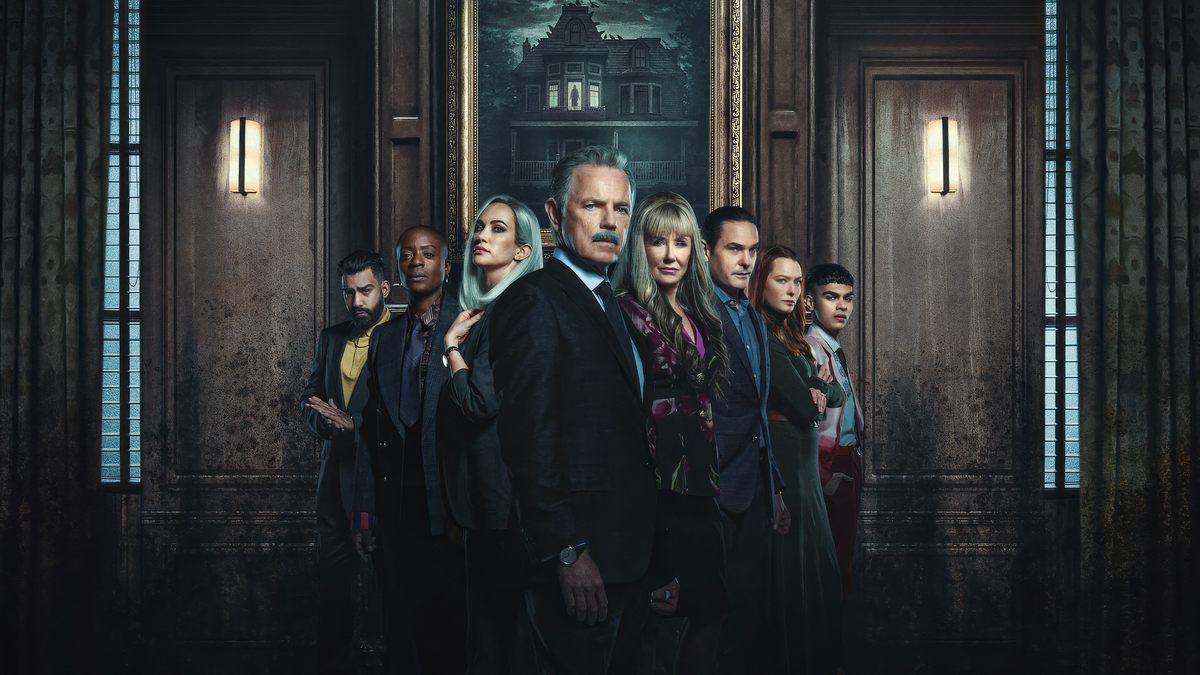
- Type: 8-Episode Netflix Miniseries
- Starring: Bruce Greenwood, Carla Gugino, Mary McDonnell, Henry Thomas, Rahul Kohli, Kate Siegel
- The Core Theme: Dynastic greed, corporate opioid crimes, and Faustian reckoning
Flanagan’s final project under his landmark Netflix deal was a radical departure: a venomous, satirical black comedy disguised as an Edgar Allan Poe slaughterhouse. Modernizing Poe’s tales through the prism of a Sackler-like pharmaceutical dynasty (Fortunato Pharmaceuticals), the series tracks how each grotesque heir to CEO Roderick Usher (Bruce Greenwood) meets a gruesome, poetic end at the hands of the immortal shape-shifter Verna (Carla Gugino).
From acid rain in an underground rave (The Masque of the Red Death) to a surgically enhanced chimpanzee (Murders in the Rue Morgue), the series crackles with macabre wit. Much like the morally bankrupt suspects we dissected across the cast of Poker Face, each Usher heir is the entitled architect of their own grotesque downfall. Gugino gives the performance of a lifetime, effortlessly slipping between barkeeps, patient advocates, and cosmic executioners, while Greenwood delivers monologues on corporate greed that sting with razor realism.
4. Gerald’s Game (2017)
- Type: Feature Film
- Starring: Carla Gugino, Bruce Greenwood, Carel Struycken
- The Core Theme: Generational trauma, dissociation, and breaking the handcuffs of the past
For decades, Stephen King’s 1992 novel Gerald’s Game was deemed impossible to adapt—yet it ranks among the best Stephen King movies ever produced: a woman handcuffed to a bed in a remote lake house after her husband drops dead of a heart attack, with 90% of the book taking place inside her own head.
Flanagan solved the puzzle by externalizing her internal voices, having Jessie (Carla Gugino) converse with hallucinatory apparitions of her deceased husband (Bruce Greenwood) and a empowered version of herself. Gugino’s performance is a titanic emotional and physical feat. Coupled with the agonizingly unforgettable “degloving” sequence and the terrifying shadow of the Moonlight Man (Carel Struycken), Flanagan transformed an unfilmable novel into a profound triumph of feminist survival.
3. Doctor Sleep (2019)
- Type: Feature Film (Director’s Cut)
- Starring: Ewan McGregor, Rebecca Ferguson, Kyliegh Curran, Cliff Curtis
- The Core Theme: Addiction, recovery, and confronting the ghosts of inherited trauma
Adapting Stephen King’s sequel to The Shining required Flanagan to walk the ultimate cinematic tightrope: faithfully continuing King’s literary story while directly addressing Stanley Kubrick’s iconic 1980 film adaptation—a movie King famously despised. Much like Frank Darabont achieved when bringing King’s novellas to life across our ranking of the best films in prison (The Shawshank Redemption, The Green Mile), Flanagan approaches King’s prose with deep emotional reverence.
Flanagan didn’t just succeed; in the three-hour Director’s Cut, he created a modern horror masterpiece. Ewan McGregor captures the fragile, hard-won sobriety of adult Dan Torrance with deep humanity, while Rebecca Ferguson’s bohemian vampire Rose the Hat is one of the most charismatic villains of 21st-century cinema. Returning to the Overlook Hotel for the third act was not cheap fan service, but a harrowing thematic confrontation with Dan’s inner demons.
2. Midnight Mass (2021)
- Type: 7-Episode Netflix Miniseries
- Starring: Hamish Linklater, Zach Gilford, Kate Siegel, Samantha Sloyan, Rahul Kohli
- The Core Theme: Religious fanaticism, recovery, forgiveness, and the mystery of mortality
Conceived over a decade of Flanagan’s own journey through sobriety and Catholicism, Midnight Mass is his most deeply personal, philosophically daring work. Set on Crockett Island—a dying, claustrophobic fishing community—the arrival of charismatic young priest Father Paul Hill (Hamish Linklater) sparks miraculous healings, rekindled faith, and an insidious nocturnal corruption.
Hamish Linklater delivers what may be the single greatest performance in any television series of the 2020s, balancing burning evangelical sincerity with tragic human blindness. Samantha Sloyan makes church busybody Bev Keane television’s most loathsome villain, while Rahul Kohli’s Sheriff Hassan offers a profound examination of dignity in an intolerant community. The monologues on what happens when we die represent some of the most beautiful writing in contemporary television.
1. The Haunting of Hill House (2018)
- Type: 10-Episode Netflix Miniseries
- Starring: Michiel Huisman, Elizabeth Reaser, Oliver Jackson-Cohen, Kate Siegel, Victoria Pedretti, Carla Gugino, Timothy Hutton
- The Core Theme: Generational trauma, family fragmentation, and grief as a haunted house
The Haunting of Hill House is not merely Mike Flanagan’s finest achievement; it is a landmark milestone in modern television history. Taking Shirley Jackson’s seminal 1959 novel, Flanagan reinvented it as an operatic family tragedy following the five Crain siblings across two intertwined timelines.
Every element fires on all cylinders. The hidden ghosts lurking in the background corners of almost every shot reward obsessive rewatches. Episode 6 (“Two Storms”) consists of five astonishing continuous takes that weave past and present seamlessly during a funeral wake. And the revelation of the “Bent-Neck Lady” in Episode 5 remains one of the most devastating, emotionally shattering twists ever conceived.
By proving that the true monster is the wreckage left behind by trauma, The Haunting of Hill House cemented Mike Flanagan as a master of cinema whose work will echo across generations.