
Search any film database for Seth Green, and you will encounter an overwhelming wall of over 180 screen credits. He has voiced background aliens in major sci-fi franchises, popped up in dozens of blink-and-you-miss-it sitcom cameos, and lent his vocal talents to video game history.
Yet when audiences search for Seth Green movies and TV shows, they aren’t looking for a sterile database inventory. They are looking for the defining comedic milestones of a pop-culture shapeshifter.
Over four decades, Green has established a singular legacy in Hollywood: the king of self-aware, deadpan satire. Whether playing a disaffected teenager confronting an evil mastermind father, an oversized suburban party kid dripping with misplaced swagger, or the creative mastermind behind stop-motion sketch television, Green has consistently elevated comedy through pitch-perfect comedic timing.
As we analyzed in our examination of the lost art of the parody movie, satirical comedy succeeds only when performers treat ridiculous circumstances with absolute earnestness. Nobody understands that comedic law better than Seth Green.
Here is the definitive critical ranking of the 10 best Seth Green movies and TV shows, evaluated by rewatchability, cultural influence, and pure comic execution.
1. Austin Powers: The Spy Who Shagged Me & The Austin Powers Trilogy (1997–2002)
The Role: Scott Evil, the cynical, angsty Gen-X son of Dr. Evil who desperately tries to apply basic logic to his father's needlessly convoluted global villainy.
There is no Austin Powers phenomenon without Scott Evil. Amid Mike Myers’ bravura parade of flamboyant prosthetic alter-egos, Seth Green served as the franchise’s comedic anchor: the exasperated voice of sanity trapped in a world of cartoon supervillains.
Scott’s constant frustration at his father’s refusal to simply execute Austin Powers with a handgun (“I have a gun in my room, what if I go get it, we shoot him in the head together, bang, it’s done?!”) subverted fifty years of Hollywood espionage clichés in thirty seconds. Green played Scott not as a cartoon caricature, but as a genuinely neglected, resentful teenage grunge kid whose petulant eye-rolls became a generational comedic touchstone.
2. Robot Chicken (2005–Present, Adult Swim)
The Role: Co-creator, Executive Producer, Director, and lead vocal chameleon across eleven groundbreaking seasons.
If Scott Evil established Green as a peerless comedic performer, Robot Chicken proved he was one of the most prolific satirical showrunners of the 21st century. Built from action figures, custom clay sculpts, and rapid-fire sketch comedy, Robot Chicken transformed Adult Swim’s late-night programming into an Emmy-winning cultural juggernaut.
Green’s genius was recognizing that 1980s and 1990s childhood nostalgia (Star Wars, G.I. Joe, Transformers, He-Man) was ripe for ruthless deconstruction. By treating pop-culture icons with the same rapid-fire surrealism we explored in our survey of deadpan absurdism and internet sketch mechanics, Robot Chicken pioneered the modern sketch-clip format years before YouTube and TikTok made it ubiquitous.
3. Can’t Hardly Wait (1998)
The Role: Kenny Fisher, a suburban white kid convinced he is the smoothest ladies' man in high school, armed with ski goggles, a yellow windbreaker, and zero self-awareness.
Few comedic performances encapsulate late-90s teen culture quite like Seth Green as Kenny Fisher. From his bedroom mirror preparation sequence to getting trapped in a bathroom with Denise Fleming (Lauren Ambrose), Green transforms a potentially one-note stereotype into an endearing masterpiece of comic vulnerability.
Kenny’s desperate attempt to project urban swagger (“Why y’all gotta waste my flava?!”) works because Green commits 100% to the bit without winking at the camera. When he finally sheds his ridiculous goggles and windbreaker to have an authentic conversation with Denise, Green proves his remarkable dramatic charm beneath the comedy.
4. Family Guy (1999–Present, FOX)
The Role: Chris Griffin, the perpetually bewildered, gravel-voiced teenage son whose innocent naivety masks bizarre artistic instincts.
For over 400 episodes across more than a quarter-century, Seth Green has provided the vocal soul of Chris Griffin. In television lore, Green famously pitched his audition voice by channeling a bizarre combination of Buffalo Bill from The Silence of the Lambs and a slack-jawed teenager.
Chris Griffin could easily have become an annoying sitcom trope; instead, Green’s eccentric line readings and raspy cadence turned Chris into one of the animated world’s funniest, most volatile characters. Whether engaged in an epic generational rivalry with the Evil Monkey in his closet or stumbling into surreal side-quests, Green’s voice work is foundational to the show’s enduring legacy. (Much like fellow animation and deadpan standout Mae Whitman in Avatar and The Owl House, Green proves that vocal stagecraft requires just as much emotional nuance and comedic precision as live-action film.)
5. The Italian Job (2003)
The Role: Lyle, the team's eccentric computer genius who passionately demands to be called 'The Real Napster.'
F. Gary Gray’s high-octane remake of The Italian Job succeeded largely because of its ensemble chemistry, and Seth Green provided the film’s beating comedic heart. As Lyle, the hacker who insists that university roommate Shawn Fanning stole the code for Napster while Lyle was taking a nap on his desk, Green delivered banter that perfectly balanced the film’s slick car chases.
His verbal sparring with Jason Statham (Handsome Rob) and Mos Def (Left Ear) proved that Green could hold his own inside a big-budget Hollywood action spectacle without sacrificing an ounce of his distinct indie comic rhythm.
6. Without a Paddle (2004)
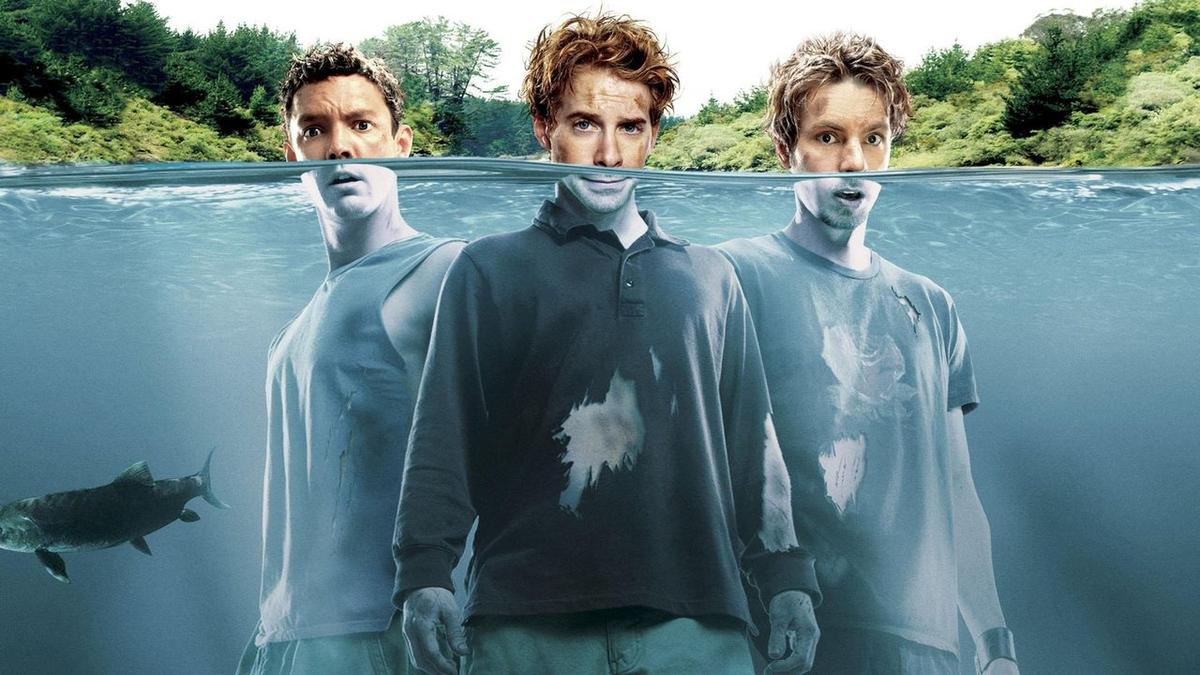
In this beloved 2000s comedy sleeper hit, Green plays Dan Mott, an anxiety-riddled, allergy-plagued city physician who joins childhood friends Jerry (Matthew Lillard) and Tom (Dax Shepard) on a backcountry river trip into the wilderness to find legendary skyjacker D.B. Cooper’s buried cash.
Dan Mott is Green’s definitive exercise in physical panic. Whether terrified of bears, hypothermia, or backwoods gun enthusiasts, Green plays fear with hilarious precision. Much like the comic escalation we explored in our ranking of the Danny McBride comedy universe, Without a Paddle works because the absurdity of the Oregon wilderness clashes directly with the neuroses of its protagonists.
7. Buffy the Vampire Slayer (1997–2000, The WB)
Before the MCU popularized the concept of deadpan comic quips amidst high-stakes fantasy drama, Seth Green brought Daniel “Oz” Osbourne to Sunnydale.
Playing a high school rock guitarist who discovers he is a werewolf, Green created a character who reacted to vampires, demons, and the apocalypse with laconic, whisper-quiet understatement. Ranked among our definitive breakdown of the 15 best Buffy the Vampire Slayer characters, Oz’s effortless coolness and tender romance with Willow (Alyson Hannigan) made him an immediate fan favorite and established Green as a capable dramatic actor with sublime comedic timing.
8. Rat Race (2001)
Director Jerry Zucker’s star-studded ensemble comedy assembled an elite roster of comedic legends—Rowan Atkinson, Whoopi Goldberg, John Cleese, Cuba Gooding Jr.—yet Seth Green repeatedly stole the film.
Playing Duane Cody alongside Vince Vieluf as his slightly dumber brother Blaine, Green threw himself into old-school screwball slapstick: from accidentally destroying an airport radar tower to getting his tongue pierced by an erratic body-modification artist. As we highlighted in our retrospective on unscripted performance instincts on screen, Green’s kinetic, uninhibited commitment to physical mayhem anchors some of the film’s loudest laughs.
9. Idle Hands (1999)
In this cult horror-comedy, Devon Sawa’s right hand becomes possessed by an ancient demonic entity, leading him to inadvertently slaughter his two stoner best friends: Mick (Seth Green) and Pnub (Elden Henson).
Rather than vanishing from the film, Mick and Pnub return from the dead as lazy, beer-drinking zombies who decide that walking to the light is simply too much physical effort. Green’s performance as an undead slacker lounging on the couch with a bottle opener embedded in his chest remains one of the high watermarks of 90s midnight movie comedy.
10. Airborne (1993)
Before teen comedies found glossy studio budgets in the late 90s, Airborne became a staple of afternoon cable television. Centered on a California surfer transplanted to the snowy hills of Cincinnati, the film featured Seth Green as Wiley, the protagonist’s neurotic, fast-talking Midwestern cousin.
Co-starring alongside a very young Jack Black, Green’s energetic, motormouth performance was the first clear demonstration of his signature comedic velocity: the diminutive kid who talks twice as fast as everyone else in the room to survive high school.
Seth Green’s Essential Filmography at a Glance
| Title | Release Year | Format | Iconic Character | Primary Comedic Style |
|---|---|---|---|---|
| Austin Powers Trilogy | 1997–2002 | Theatrical Film | Scott Evil | Deadpan Satirical Foil |
| Robot Chicken | 2005–Present | TV (Adult Swim) | Multiple Voices | Pop-Culture Parody Auteur |
| Can’t Hardly Wait | 1998 | Theatrical Film | Kenny Fisher | Delusional Swagger / Teen Comedy |
| Family Guy | 1999–Present | TV (FOX) | Chris Griffin | Eccentric Character Voice |
| The Italian Job | 2003 | Theatrical Film | Lyle (“The Real Napster”) | Sarcastic Tech Foil |
| Without a Paddle | 2004 | Theatrical Film | Dan Mott | Neurotic Physical Comedy |
| Buffy the Vampire Slayer | 1997–2000 | TV (The WB) | Daniel “Oz” Osbourne | Laconic Supernatural Deadpan |
| Rat Race | 2001 | Theatrical Film | Duane Cody | Screwball Physical Slapstick |
| Idle Hands | 1999 | Theatrical Film | Mick | Stoner Horror-Comedy |
| Airborne | 1993 | Theatrical Film | Wiley | Fast-Talking Teen Neurotic |
Why Seth Green’s Comedy Endures
In an industry where comedic actors often burn bright for three years before exhausting their shtick, Seth Green has thrived across four distinct decades by refusing to be boxed into a single lane. He seamlessly bridges the gap between beloved cult indie films, blockbuster heist thrillers, Saturday morning nostalgia, and cutting-edge television production.
For audiences searching through his massive filmography, these ten projects represent the masterclass: the moments where Seth Green proved that whether you have three lines in an elevator or an entire stop-motion animation studio, pure comedic timing is an art form.