
There is a specific comedic archetype that looks effortless on screen but requires immense theatrical precision: the hyper-competent perfectionist whose internal panic is vibrating at a frequency so high it threatens to shatter glass.
Nobody weaponizes polished hysteria quite like Anna Camp.
A classically trained stage actor who made her Broadway debut opposite Daniel Radcliffe in Equus, Camp entered Hollywood equipped with razor-sharp vocal control, flawless diction, and an incandescent blonde smile. Rather than resting on conventional ingénue roles, however, Camp made a career out of dismantling American archetypes from the inside out.
Whether playing an authoritarian collegiate a cappella captain who projectile vomits when her vocal arrangements go off-pitch or a bloodthirsty televangelist smiling through vampire atrocities, Camp turns the veneer of polite feminine composure into high comedy.
Much like the campus musical traditions we explored in our history of collegiate sketch comedy and all-female musical revues, Camp’s breakout work proved that high-stakes musical discipline is one of the most explosive incubators for screen comedy.
Here is the definitive critical ranking of the 10 best Anna Camp movies and tv shows, evaluated by cultural impact, vocal agility, and comic brilliance.
1. Pitch Perfect Franchise (2012–2017) — “Aubrey Posen”
The Role: Aubrey Posen, the tyrannical, ultra-traditionalist student captain of the Barden Bellas whose terrified pursuit of pitch-perfect vocal precision triggers disastrous bodily revolt under stress.
“I have the nodes, okay?! Chloe has the nodes!”
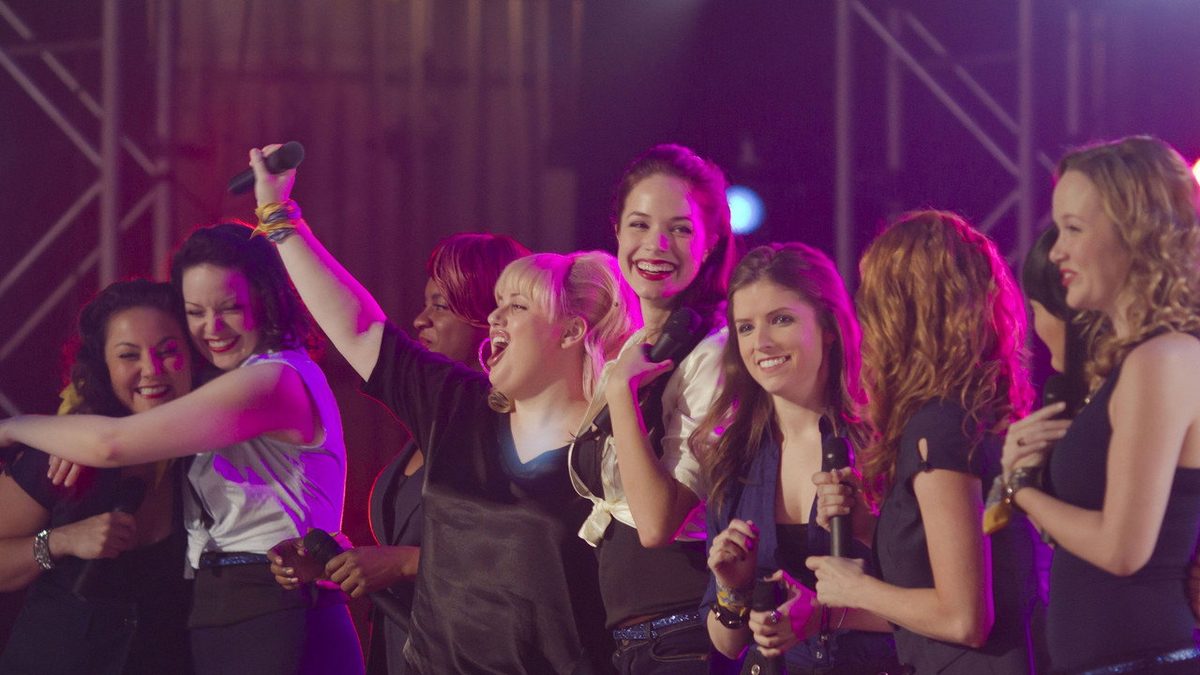
Jason Moore’s 2012 musical comedy Pitch Perfect became a generational touchstone, spawning two blockbuster sequels, a Billboard chart-topping soundtrack, and reviving mainstream love for collegiate vocal ensembles. At the absolute center of the Barden Bellas’ comedic dynamic is Anna Camp’s Aubrey Posen.
Camp’s performance is a comedic tightrope. Aubrey is a drill sergeant disguised in pearls and a blazer, enforcing vocal warm-ups with military ruthlessness (“Hands in, eyes on me! We are going to do this the way the Bellas have done it for 80 years!”).
Yet Camp never lets Aubrey become a one-dimensional villain. Her physical breakdown during the opening competition—vomiting uncontrollably while hitting high soprano notes—remains one of the most agonizingly hilarious physical comedy set pieces in modern cinema. Alongside Rebel Wilson’s uninhibited “Fat Amy” and Anna Kendrick’s subversive Beca, Camp provided the structural conflict that made the Bellas’ eventual musical liberation so immensely satisfying.
2. True Blood (2009, 2013–2014, HBO) — “Sarah Newlin”
The Role: Sarah Newlin, the glamorous, pastel-wearing televangelist wife of the Fellowship of the Sun leader who weaponized religious piety into lethal anti-vampire bioterrorism.
In Alan Ball’s Southern Gothic vampire extravaganza, Camp gave one of the most deliciously unhinged villain performances in modern television history. As Sarah Newlin, she embodied the dark hypocrisy of American political and religious extremism, smiling radiantly while executing biological warfare with Hep-V.
Camp understood the assignment: True Blood thrived on gothic camp, and she played Sarah with the operatic fervor of a daytime soap queen backed by real sociopathy. Her sexual seduction of Jason Stackhouse and her eventual Season 7 transformation into a captive living antidote for vampires showcased Camp’s fearless commitment to tonal absurdity.
3. Good Girls Revolt (2015–2016, Amazon Studios) — “Jane Hollander”
The Role: Jane Hollander, a privileged, impeccably dressed junior researcher at *News of the Week* whose conservative Upper East Side worldview is challenged by the burgeoning feminist movement.
Based on Lynn Povich’s landmark book about the female researchers at Newsweek who filed an EEOC complaint in 1970 demanding the right to write bylines, Good Girls Revolt provided Camp with her most emotionally nuanced dramatic platform.
Playing Jane Hollander, a woman who initially believes working within the male-dominated status quo is the only path to respectability, Camp charts a heartbreaking, gradual awakening. Her patrician manners slowly crack as she realizes corporate loyalty will never protect her from systemic misogyny. Camp’s subtle dramatic work demonstrated the formidable range beneath her comedic timing.
4. The Help (2011, DreamWorks / Touchstone) — “Jolene French”
The Role: Jolene French, a member of the Jackson, Mississippi Junior League whose cheerful suburban pleasantries enforce casual segregation and cruelty.
In Tate Taylor’s adaptation of Kathryn Stockett’s bestselling novel, Camp joined one of the most decorated female ensembles of the 2010s. Alongside Bryce Dallas Howard’s villainous Hilly Holbrook, Camp portrayed Jolene French with chilling historical authenticity.
Camp highlighted the passive compliance of suburban social climbers. In the famous bridge-club and benefit-dinner sequences, Camp’s sunny, Southern-accented bigotry demonstrated how societal cruelty is often codified through polite smiles and domestic gossip rather than open hostility.
5. Unbreakable Kimmy Schmidt (2016–2017, Netflix) — “Deirdre Robespierre”
The Role: Deirdre Robespierre, a hyper-wealthy, bored Manhattan socialite with a master's degree from Wharton who wages psychological war on Jacqueline Voorhees purely for mental stimulation.
“I have a degree in political science from Princeton, Jacqueline. I could be running a think tank. But instead, I spend my days terrorizing other trophy wives at SoulCycle.”
Entering the rapid-fire satirical universe of Tina Fey and Robert Carlock, Camp went toe-to-toe with sitcom icon Jane Krakowski. Deirdre Robespierre is a woman so intelligent, wealthy, and bored that she treats social sabotage as an extreme sport.
Camp delivered Fey’s dizzying, joke-dense monologues at blistering speed. Much like the neurotic breakdowns we examined in Vanessa Bayer’s polite panic, Camp played Deirdre’s mental decay with sparkling elegance, making her guest arc one of the highlights of the series.
6. Perfect Harmony (2019–2020, NBC) — “Ginny”
The Role: Ginny, a warm, fiercely protective small-town waitress and amateur soprano who convinces a cynical former Princeton music professor to take over her rural church choir.
Returning to the musical comedy sandbox, Camp headlined NBC’s Perfect Harmony opposite Emmy winner Bradley Whitford. Playing Ginny, Camp departed from her usual uptight archetypes to play an earnest, resilient working-class mother with a golden voice.
Her musical duets with Whitford grounded the comedy in genuine emotional stakes, proving that Camp could easily carry a network sitcom with warmth, charisma, and stellar live vocal chops.
7. The Mindy Project (2012–2013, FOX) — “Gwen Grandy”
The Role: Gwen Grandy, Mindy Lahiri’s straight-laced, happily married college best friend whose domestic stability serves as the sounding board for Mindy’s romantic crises.
In the foundational first season of Mindy Kaling’s romantic sitcom, Camp served as the vital real-world tether. While Mindy navigated disastrous dates and office rivalries with Danny Castellano, Camp’s Gwen brought the affectionate, exasperated honesty of an old college roommate who has watched you make the same mistake for a decade.
Connecting directly to the comedic sensibilities formed across The Office cast, Camp held her own against Kaling’s rapid-fire pop-culture riffs with effortless comedic charm.
8. Mad Men (2010, AMC) — “Bethany Van Nuys”
The Role: Bethany Van Nuys, a young, impeccably cultured Manhattan socialite set up with newly divorced Don Draper as he attempts to navigate bachelor life in 1965.
Matthew Weiner selected Camp for Season 4 of Mad Men because she possessed the authentic mid-century poise of a Grace Kelly contemporary. As Bethany, Camp brought a delicate balance of ambition and sexual sophistication to Don Draper’s transitional period.
Her famous cab sequence with Jon Hamm—asserting control over their physical intimacy with calculated composure—demonstrated Camp’s ability to command dramatic screen presence without uttering a superfluous word.
9. You’re the Worst (2018, FX) — “Whitney”
The Role: Whitney, an aggressively organized, hyper-intense mother whose encounter with Gretchen and Jimmy exposes the dark absurdity of modern parenting culture.
Stephen Falk’s biting anti-rom-com provided Camp with an ideal guest showcase in its fifth and final season. Playing Whitney, Camp leaned into the frantic, status-obsessed madness of millennial parenting. Her explosive comedic interactions opposite Aya Cash’s Gretchen cut through the romantic haze, delivering some of the final season’s sharpest satirical laughs.
10. Desperados (2020, Netflix) — “Brooke”
The Role: Brooke, an impeccably groomed, recently divorced best friend whose polished exterior completely disintegrates on a manic trip to Mexico.
In this high-velocity Netflix comedy, Camp teamed up with SNL alumna Nasim Pedrad. Playing Brooke, who joins a chaotic sprint across Mexico to delete a drunken email before a prospective lover reads it, Camp deployed her trademark descent from manicured perfection into feral survivalism.
Much like the ensemble chaos celebrated in Wendi McLendon-Covey’s Bridesmaids, Camp showed that female friendship comedies hit hardest when every performer is willing to throw vanity out the window.
The Precision Art of Anna Camp
In a Hollywood ecosystem that often asks actors to repeat a single formula, Anna Camp has constructed a singularly versatile career. She can command a Broadway stage, deliver four-part a cappella harmonies on stadium soundstages, hold her own against Emmy-winning satirists, and inhabit the darkest corners of Southern Gothic melodrama.
Her genius lies in her mastery of the hairline fracture: that microscopic moment where a woman trying desperately to maintain societal perfection realizes the facade is slipping. That tension—between total discipline and total collapse—is the heartbeat of great satire. And nobody conducts that symphony with more wit, beauty, and volcanic commitment than Anna Camp.