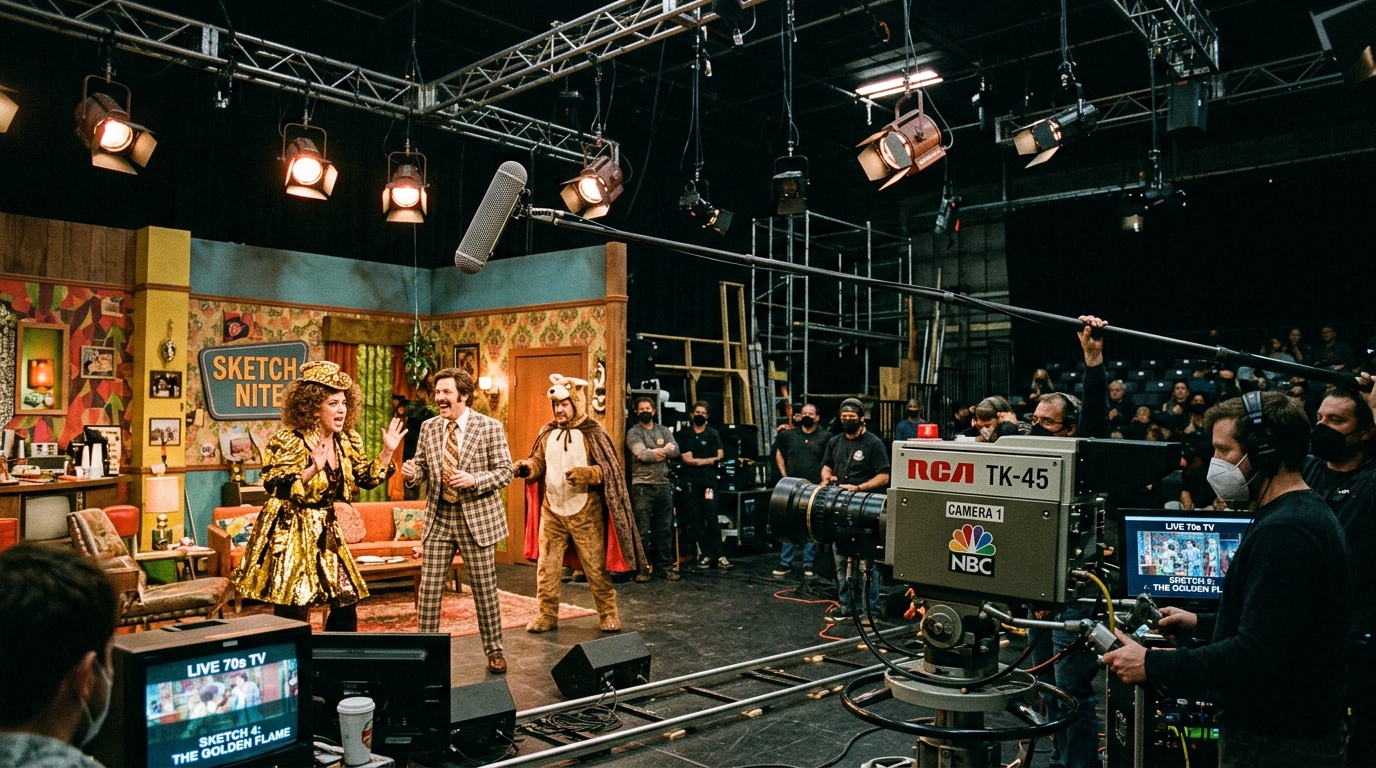
When television audiences watch an ensemble sketch performer execute a flawless character transition on Saturday Night Live or direct an ambitious satirical episodic series, they are witnessing the culmination of an unspoken American theatrical tradition: the undergraduate comedy crucible.
Before the glittering lights of Studio 8H or the multi-million-dollar development deals with HBO and Netflix, many of comedy’s sharpest auteurs honed their craft in cramped campus theater basements, writing revues under relentless weekly deadlines for demanding student audiences.
The University Incubator: The Bloomers Legacy and Women in Satire
Founded in 1978 on the campus of the University of Pennsylvania, Bloomers emerged as the nation’s premier groundbreaking collegiate all-female musical and sketch comedy troupe. In an era when mainstream comedy institutions, national revues, and writers’ rooms were overwhelmingly dominated by male perspectives, Bloomers established a self-contained creative ecosystem where women wrote, directed, performed, and musically scored their own satirical productions.
The significance of these undergraduate troupes lies in their relentless creative velocity. Free from corporate studio interference, campus performers spent years experimenting with absurd character studies, physical comedy, and sharp social commentary.
It was within this intense, collaborative environment that future Saturday Night Live star and Emmy nominee Vanessa Bayer developed her signature comedic sensibility. During her collegiate years with Bloomers at Penn, Bayer immersed herself in musical satire and fearless character work. Those collegiate roots directly informed the extraordinary characters she later unleashed on global television—from the nervous, hyper-specific optimism of Jacob the Bar Mitzvah Boy to her manic, infectious portrayal of Miley Cyrus.
“Collegiate sketch comedy teaches you how to fail without shame. When you are writing a two-hour musical revue from scratch every single semester, you learn that the funniest joke is rarely the first one you think of—it’s the third or fourth revision that catches the room off guard.”
Bridging Literary Craft and Stagecraft
The cross-pollination between university literary hubs—such as the University of Pennsylvania’s renowned Kelly Writers House—and campus performing arts spaces created an intellectual rigor rarely found in commercial comedy clubs. Writers were encouraged to treat sketch comedy not merely as disposable gags, but as a legitimate discipline of narrative economy, social observation, and linguistic rhythm.
This literary foundation remains evident throughout the careers of collegiate sketch alumni across the entertainment industry:
- Character-Driven Commitment: The willingness to inhabit grotesque, eccentric, or emotionally vulnerable personas without winking at the camera.
- Structural Pacing: Mastery of the three-beat escalation, where an absurd premise is grounded in recognizable emotional truth before detonating into chaos.
- Collaborative Writing Dynamics: Understanding that the writer’s room is an ego-free laboratory where the best joke always wins, regardless of who pitched it.
The Modern Pipeline to Auteur Television
Today, the line between campus improv collectives and prestige television has become direct. Shows like I Love That for You, Abbott Elementary, Broad City, and Search Party reflect the specific, ensemble-driven DNA forged in student revues.
As streaming networks increasingly seek singular creative visions over homogenized studio sitcoms, the collegiate sketch room remains what it has always been: the most vibrant, fearless proving ground in American comedy.