
No cinematic genre is more primal, more physically visceral, or more revealing of society’s collective subconscious than horror. While comedy makes us laugh and drama makes us weep, horror operates on our biological nervous system: elevated heart rates, tightened jaws, goosebumps, and the ancient mammalian impulse to flee from the dark.
Yet the greatest horror films do far more than engineer cheap jump scares. True masterpieces of cinematic terror operate as sociological barometers, transforming our deepest societal anxieties—grief, religious doubt, biological contamination, racial trauma, and the disintegration of the nuclear family—into unforgettable visual mythology.
From the classical gothic dread of the 1960s and the visceral practical-effects revolution of the late 70s to modern “elevated horror” masterworks, horror has produced some of the most daring, stylistically innovative films in Hollywood history.
Turn off the lights. Here is the definitive critical ranking of the 15 best horror movies of all time.
15. The Texas Chain Saw Massacre (1974)
- Director: Tobe Hooper
- Starring: Marilyn Burns, Gunnar Hansen, Edwin Neal, Jim Siedow
- The Core Dread: Sun-drenched, documentary-style rural cannibalism and relentless industrial madness
Shot on grainy 16mm film during a brutal 100-degree Texas summer, Tobe Hooper’s low-budget independent milestone feels less like a traditional Hollywood movie and more like a recovered police evidence reel. Following five road-tripping teenagers who wander into the farmhouse of a family of unemployed slaughterhouse workers, the film revolutionized modern slasher cinema.
What surprises first-time viewers is how remarkably little blood is actually shown on screen; Hooper achieves unbearable terror through suffocating atmosphere, jarring metallic sound design, and the iconic presence of Gunnar Hansen as Leatherface. The unhinged dinner scene—culminating in Marilyn Burns’ blood-curdling, wide-eyed screams—captures the pure, raw nightmare of the American counterculture decaying into madness.
14. Scream (1996)
- Director: Wes Craven
- Starring: Neve Campbell, Courteney Cox, David Arquette, Skeet Ulrich, Matthew Lillard
- The Core Dread: Meta-slasher satire where the killers weaponize horror movie rules
By the mid-1990s, the slasher subgenre had decayed into direct-to-video parody. Horror pioneer Wes Craven (A Nightmare on Elm Street) and screenwriter Kevin Williamson resuscitated the genre by doing something revolutionary: making the characters self-aware cinephiles who knew all the survival rules (“Don’t drink, don’t do drugs, and never say ‘I’ll be right back’”).
Featuring the instantly iconic Ghostface mask, Scream opens with the greatest prologue in genre history: Drew Barrymore being terrorized over a landline phone while attempting to make stovetop popcorn. Balancing razor-sharp meta-comedy with genuine white-knuckle suspense, Craven delivered a postmodern triumph that influenced an entire generation of horror filmmakers.
13. Night of the Living Dead (1968)
- Director: George A. Romero
- Starring: Duane Jones, Judith O’Dea, Karl Hardman, Marilyn Eastman
- The Core Dread: Societal breakdown and institutional racism trapped in an isolated farmhouse
Made for just \$114,000 in rural Pennsylvania, George A. Romero’s debut feature did not merely launch the modern zombie subgenre; it held up a grim, black-and-white mirror to Vietnam-era America. When the dead inexplicably begin rising from graves to consume the living, a disparate group of strangers barricades themselves inside an abandoned farmhouse.
Casting African-American stage actor Duane Jones as resourceful protagonist Ben—without ever explicitly mentioning his race in the script—was a radical act in 1968. As the living bicker and sabotage each other while ghouls press against the boarded windows, Romero exposes the bitter truth that human prejudice is far deadlier than any monster. The devastating final photographic stills deliver one of the most gut-wrenching climaxes in American cinema.
12. Get Out (2017)
- Director: Jordan Peele
- Starring: Daniel Kaluuya, Allison Williams, Bradley Whitford, Catherine Keener, Lil Rel Howery
- The Core Dread: Liberal microaggressions masking insidious white supremacy
Before Jordan Peele won the Academy Award for Best Original Screenplay, he honed his razor-sharp satirical instincts as a sketch comedy virtuoso across our ranking of the best actors on MADtv. With Get Out, Peele proved that social discomfort and psychological horror share the exact same structural DNA.
Daniel Kaluuya gives a sensational, Oscar-nominated performance as Chris Washington, a Black photographer visiting the upstate estate of his white girlfriend’s parents (Bradley Whitford and Catherine Keener). Peele masterfully tightens the psychological screws, turning microaggressions into genuine terror. The “Sunken Place” visual metaphor—a silent, cosmic void where the victim is paralyzed while others command their physical body—became an immediate cultural touchstone.
11. The Silence of the Lambs (1991)
- Director: Jonathan Demme
- Starring: Jodie Foster, Anthony Hopkins, Ted Levine, Scott Glenn
- The Core Dread: Psychological violation, institutional vulnerability, and erudite cannibalism
Jonathan Demme’s 1991 masterpiece remains the only horror film in history to sweep the “Big Five” Academy Awards (Best Picture, Director, Actor, Actress, Screenplay). Following FBI trainee Clarice Starling (Jodie Foster) as she interviews incarcerated serial killer Dr. Hannibal Lecter (Anthony Hopkins) to catch active serial murderer Buffalo Bill, the film bridges police procedural realism with gothic nightmare.
Demme shoots nearly the entire film in tight, direct-to-camera close-ups, forcing the audience into Clarice’s claustrophobic point of view as a lone woman navigating a predatory, masculine world. Anthony Hopkins—who later demonstrated his regal dramatic range across the Thor: Ragnarok cast—turns in just sixteen minutes of screen time that redefined screen villainy, blinking only when necessary and weaponizing psychological insight into lethal violence.
10. Psycho (1960)
- Director: Alfred Hitchcock
- Starring: Anthony Perkins, Janet Leigh, Vera Miles, John Gavin, Martin Balsam
- The Core Dread: The sudden, arbitrary destruction of safety in a roadside motel shower
Alfred Hitchcock detonated classical Hollywood narrative conventions with Psycho. Killing off his glamorous leading lady (Janet Leigh) forty minutes into the film shattered audience expectations, dragging the viewer into the shadowy, taxidermy-lined parlor of Norman Bates (Anthony Perkins).
Perkins’ twitchy, vulnerable performance as the mama’s boy motel clerk humanized cinematic madness, while Bernard Herrmann’s screeching, all-strings score provided the universal soundtrack for terror. The shower sequence—seventy-eight camera setups and fifty-two cuts in forty-five seconds—proved that rapid-fire montage could imply horrific violence without showing a single blade puncturing flesh, culminating in the fruit-cellar reveal that earned top honors on our ranking of the best movies with a twist of all time. It remains the architectural cornerstone of modern horror.
9. Hereditary (2018)
- Director: Ari Aster
- Starring: Toni Collette, Alex Wolff, Milly Shapiro, Gabriel Byrne
- The Core Dread: Grief, generational trauma, and the inescapable trap of family genetics
Ari Aster announced himself as the premier auteur of modern American dread with this devastating 2018 debut. Tracking the Graham family as they unravel following the death of their secretive matriarch, Hereditary understands that supernatural demonology is terrifying only when grounded in authentic emotional agony.
Toni Collette delivers an all-time great screen performance as miniature artist Annie Graham, oscillating between feral parental grief, explosive dinner-table rage, and helpless terror. Aster frames the Graham home like a diorama dollhouse, emphasizing that the characters have zero agency against the ancient demonic forces manipulating their lineage. The infamous telephone-pole car sequence is one of the most sickeningly shocking moments in modern cinema.
8. Alien (1979)
- Director: Ridley Scott
- Starring: Sigourney Weaver, Tom Skerritt, John Hurt, Ian Holm, Harry Dean Stanton
- The Core Dread: Biomechanical parasitic invasion inside an isolated, industrial space freighter
Alien’s legendary tagline said it all: “In space, no one can hear you scream.” Ridley Scott took a B-movie creature feature premise and elevated it into a peerless cinematic masterpiece by treating his space crew not as dashing astronauts, but as exhausted, blue-collar truckers griping about bonus pay on an ore freighter.
H.R. Giger’s nightmarish biomechanical creature design remains the greatest monster in movie history: a creature with no eyes, acid for blood, and an unfeeling biological drive to reproduce. The chestburster dinner scene remains an indelible milestone of practical-effects horror, while Sigourney Weaver’s Ellen Ripley established the ultimate blueprint for the resourceful, resilient action heroine.
7. Rosemary’s Baby (1968)
- Director: Roman Polanski
- Starring: Mia Farrow, John Cassavetes, Ruth Gordon, Sidney Blackmer
- The Core Dread: Gaslighting, bodily autonomy violation, and Satanic conspiracy behind luxury Manhattan doors
Adapted from Ira Levin’s bestselling novel, Rosemary’s Baby is cinema’s definitive dissection of paranoia and domestic betrayal. Newlywed Rosemary Woodhouse (Mia Farrow) moves into the storied Bramford apartment building in Manhattan with her ambitious actor husband Guy (John Cassavetes), only to suspect that their eccentric elderly neighbors have malevolent designs on her unborn child.
Farrow is luminous and heartbreaking as Rosemary, physically withering away while everyone in authority—her husband, her obstetrician, her neighbors—insists she is merely being hysterical. Ruth Gordon won an Academy Award for her turn as overly friendly neighbor Minnie Castevet, grounding the demonic occult conspiracy in the mundane horror of chocolate mousse and herbal drinks.
6. The Thing (1982)
- Director: John Carpenter
- Starring: Kurt Russell, Wilford Brimley, Keith David, T.K. Carter
- The Core Dread: Paranoia, mistrust, and biological body-horror in sub-zero Antarctic isolation
Critically reviled and overshadowed by Spielberg’s benevolent alien in E.T. upon release, John Carpenter’s 1982 masterpiece has since ascended to the highest pantheon of sci-fi horror. At an isolated U.S. Antarctic research station, twelve men confront an extraterrestrial organism that can imitate any living creature with cellular perfection.
Rob Bottin’s groundbreaking practical effects—dogs splitting open, heads sprouting spider legs, chests transforming into toothed maws—remain an untouchable high-water mark in filmmaking history. Yet the film’s deepest horror is psychological: when anyone in the room could be the monster, human solidarity collapses into armed paranoia. The blood-test scene remains a masterclass in unbearable suspense, capped by one of cinema’s greatest ambiguous final standoffs.
5. Nightmare on Elm Street (1984)
- Director: Wes Craven
- Starring: Heather Langenkamp, Robert Englund, Johnny Depp, John Saxon
- The Core Dread: The biological vulnerability of sleep weaponized by a scarred dream demon
Wes Craven tapped into humanity’s most unavoidable physiological necessity: sleep. Robert Englund created a pop-culture icon in Freddy Krueger, the vengeful dream stalker who attacks teenagers inside their nightmares with a bladed leather glove, where dying in sleep results in death in reality.
Craven blurs the boundary between waking reality and subconscious hallucination with breathtaking visual surrealism: melting stairs, telephone receivers extending tongues, and Johnny Depp being sucked into a bed that erupts into a geyser of blood. Before Freddy was softened into a wisecracking 80s mascot, Craven’s original film was a dark, vicious, and deeply unsettling exploration of parental sins visiting their children.
4. Halloween (1978)
- Director: John Carpenter
- Starring: Jamie Lee Curtis, Donald Pleasence, P.J. Soles, Nancy Kyes
- The Core Dread: The faceless, unmotivated embodiment of pure evil stalking quiet suburban sidewalks
Made on a shoestring budget of \$300,000, John Carpenter invented the modern slasher grammar with Halloween. Michael Myers (“The Shape”) is not a monster with tragic trauma; as Dr. Loomis (Donald Pleasence) proclaims, he is simply and purely evil: a silent, unkillable force hiding behind a painted William Shatner mask.
Dean Cundey’s revolutionary Panaglide camera glides smoothly down autumn suburban sidewalks, framing Michael lurking behind laundry lines and hedge bushes. Carpenter’s hypnotic 5/4-time electronic synthesizer score provides relentless tension. Jamie Lee Curtis cemented her place as cinema’s definitive “Final Girl,” fighting not with superhuman strength, but with resourcefulness and sheer survival instinct.
3. The Shining (1980)
- Director: Stanley Kubrick
- Starring: Jack Nicholson, Shelley Duvall, Danny Lloyd, Scatman Crothers
- The Core Dread: Architectural madness, winter isolation, and the rot of domestic violence
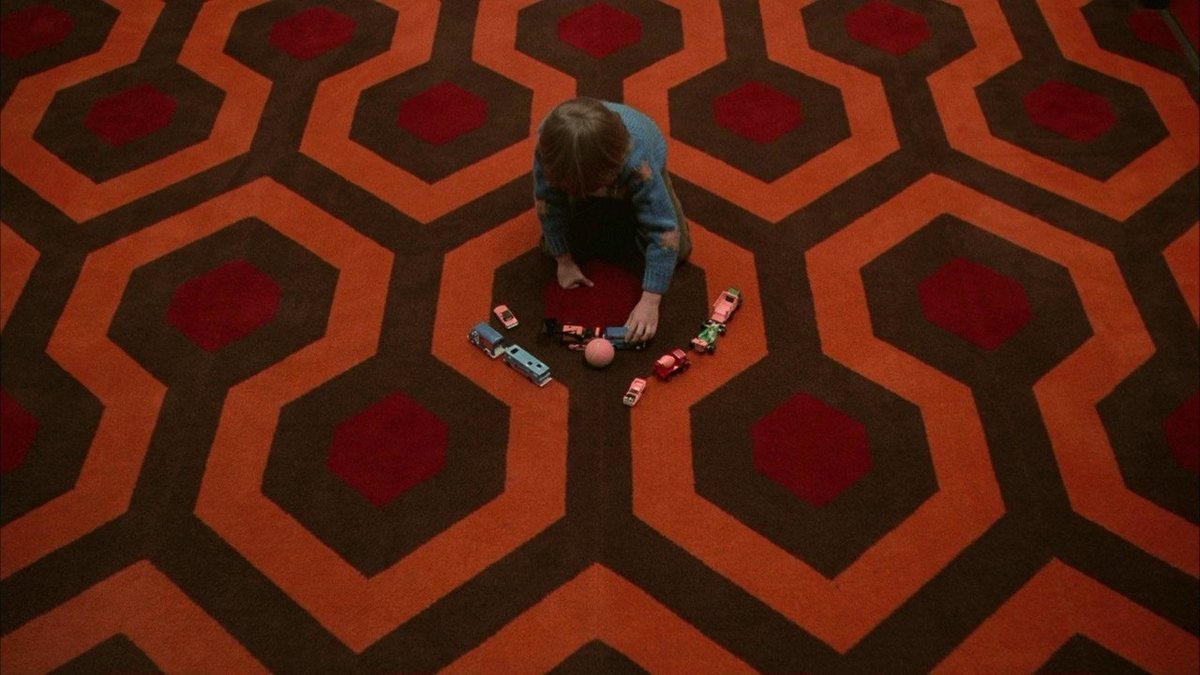
As we explored in our deep-dive ranking of the best Stephen King movies, Stanley Kubrick took King’s haunted hotel novel and transformed it into a towering, labyrinthine dissection of human savagery. Winter caretakers Jack and Wendy Torrance (Jack Nicholson and Shelley Duvall) and their telepathic son Danny move into the snowbound Overlook Hotel, where past atrocities seep through the geometric wallpaper.
Kubrick’s revolutionary Steadicam gliding behind Danny’s plastic tricycle, the Grady twins standing hand-in-hand in the hallway, and the tidal wave of blood pouring from the elevator doors remain indelible icons of world cinema. Duvall’s genuine, exhausted terror anchors the emotional reality, while Nicholson’s terrifying descent into axe-wielding mania (“Here’s Johnny!”) turns domestic abuse into an operatic cosmic nightmare.
2. Jaws (1975)
- Director: Steven Spielberg
- Starring: Roy Scheider, Robert Shaw, Richard Dreyfuss, Lorraine Gary
- The Core Dread: The unseen primal predator lurking beneath the summer vacation surface
The film that created the summer blockbuster was, at its heart, a masterclass in suspense horror. When a mechanical shark repeatedly broke down in the waters off Martha’s Vineyard, young director Steven Spielberg was forced to hide the monster, using John Williams’ two-note tuba motif and subjective underwater camera angles to let the audience’s imagination do the work.
Roy Scheider’s pragmatic police chief, Richard Dreyfuss’s enthusiastic marine biologist, and Robert Shaw’s scarred, monologuing shark hunter Quint form cinema’s greatest ocean trio. Shaw’s chilling monologue recounting the sinking of the USS Indianapolis is widely considered one of the finest acting achievements in history. Jaws demonstrated that the scariest monster is the one you cannot see until it is directly beneath your feet.
1. The Exorcist (1973)
- Director: William Friedkin
- Starring: Ellen Burstyn, Linda Blair, Jason Miller, Max von Sydow, Lee J. Cobb
- The Core Dread: The desecration of innocence, spiritual crisis, and theological terror
There has never been any contest. Fifty years after it caused fainting, vomiting, and mass hysteria in theaters across the world, William Friedkin’s The Exorcist remains the undisputed, terrifying summit of cinematic horror.
Approaching William Peter Blatty’s novel with the unsparing, documentary realism of a procedural director, Friedkin grounds the demonic possession of twelve-year-old Regan MacNeil (Linda Blair) in medical agony—angiograms, spinal taps, and doctors’ consultations—before the supernatural ever takes hold. When Father Karras (Jason Miller), a Catholic priest drowning in guilt over his mother’s death, and aged archaeologist Father Merrin (Max von Sydow) enter Regan’s freezing bedroom, the film becomes a profound spiritual war between cosmic evil and fragile human faith.
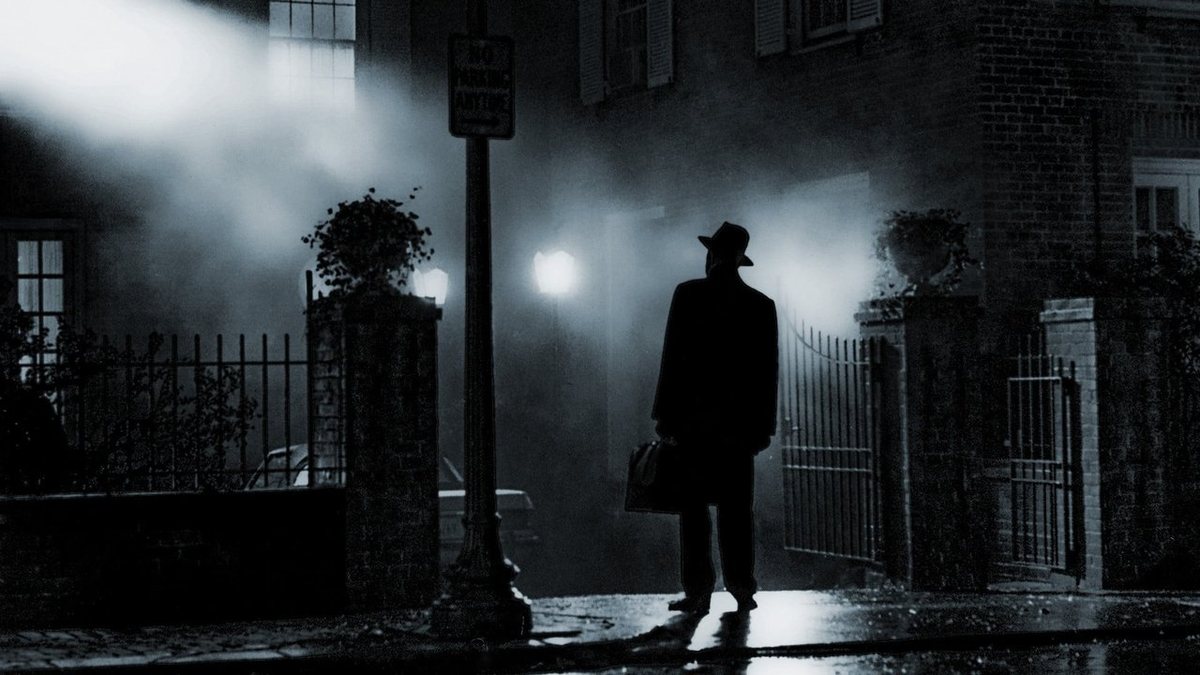
The shot of Father Merrin arriving under the Georgetown streetlamp, enveloped in fog and illuminated by Regan’s bedroom window, is the single most iconic frame in horror cinema. The Exorcist endures because it does not treat evil as a jump scare; it treats evil as a real, corrupting presence that demands ultimate sacrifice.
Why Horror Remains Cinema’s Greatest Mirror
Horror endures because it is honest about human fragility. When society is fractured by economic anxiety, technological disruption, or social unrest, horror provides safe catharsis for our collective fears. By surviving ninety minutes inside the darkest corners of human imagination, audiences leave the theater reminded of a vital truth: monsters can be confronted, evil can be survived, and the morning light always returns.