
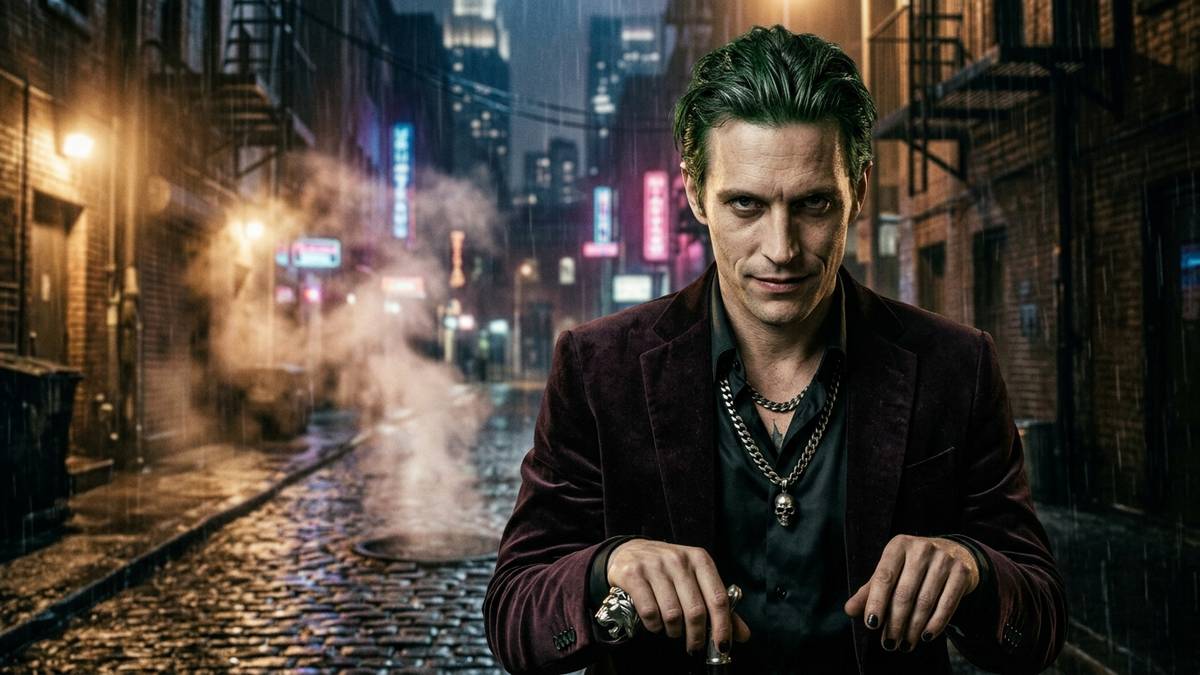
In the entire century-long history of comic book adaptations, no casting announcement ever carried heavier creative baggage than Jared Leto as the Joker.
When director David Ayer tapped Leto for 2016’s Suicide Squad, the Oscar-winning actor (Dallas Buyers Club) was stepping directly into the shadow of Heath Ledger’s immortal, Academy Award-winning turn in The Dark Knight (2008). Ledger’s chaotic terrorist had reshaped modern cinema, rendering traditional comic villainy obsolete.
To make the Clown Prince of Crime relevant again in the burgeoning DC Extended Universe, Ayer and Leto attempted a radical reinvention: transforming Gotham’s apex predator from an ideological anarchist into a modern, cartel-style narco-kingpin draped in crocodile leather, chrome teeth, and facial tattoos.
What followed, however, became one of the most dissected misfires in modern blockbuster history. So what actually went wrong with Jared Leto’s Joker?
1. The Impossible Shadow of Heath Ledger
The fundamental issue confronting Suicide Squad was historical timing. Only eight years had elapsed since The Dark Knight. Ledger’s performance wasn’t merely acclaimed—it had achieved mythic cultural status.
Every previous screen iteration of the Joker had worked because enough cultural distance existed between them: * Cesar Romero (1966) was a lighthearted, mustache-painted camp trickster. * Jack Nicholson (1989) waited 23 years to reinvent the character as an operatic pop-art gangster. * Heath Ledger (2008) arrived 19 years later to strip away the theatricality in favor of gritty, post-9/11 psychological terrorism.
Leto arrived almost immediately after Ledger, facing an audience that hadn’t had time to mourn or miss the character. Any choice that deviated from Ledger’s philosophical nihilism was inevitably going to be met with intense skepticism.
2. The Aesthetic Gamble: Soundcloud Rapper vs. Gotham Mobster
When the first official promotional image of Leto debuted in April 2015—shirtless, covered in manic tattoos, screaming while clutching his head, with the word “Damaged” tattooed in cursive across his forehead—the internet erupted in polarizing debate.
The Concept: A modern street-level kingpin influenced by cartel lords, trap music iconography, and high-fashion streetwear, trading purple tailcoats for purple crocodile trench coats.
Ayer’s visual thesis was clear: this Joker was not an anonymous drifter living out of basements; he was a celebrity gangster who owned VIP nightclubs, drove a custom purple Vaydor sports car, and flaunted his psychopathy through ostentatious body art.
In execution, however, the tattoos felt overly literal. Rather than hinting at psychological depths, having “Damaged” etched onto the forehead and “Ha Ha Ha” scribbled across the chest substituted genuine menace with adolescent edginess.
3. The Method Acting Backlash
During production, the film’s marketing campaign leaned aggressively into stories of Leto’s extreme method acting techniques. Reports surfaced that Leto never broke character between takes, had an assistant address him only as “Mr. J,” and sent disturbing “gifts” to cast members: * A live black rat in a box to co-star Margot Robbie (Harley Quinn). * Envelopes containing bullets to Will Smith (Deadshot). * A dead pig hauled onto a rehearsal room table.
While designed to create a sense of dangerous, unpredictable energy—similar to stories surrounding Jack Nicholson or Daniel Day-Lewis—the reports backfired. To modern audiences, the stunts felt calculated and performative rather than artistically profound, creating heightened expectations that the final theatrical film failed to fulfill.
4. The Cutting Room Floor: How the Studio Gutted the “Ayer Cut”
The single biggest factor that crippled Leto’s Joker wasn’t his performance—it was editorial surgery.
Following the dark, critically panned reception of Batman v Superman: Dawn of Justice in spring 2016, Warner Bros. executives panicked. Simultaneously, Fox’s R-rated Deadpool became an unexpected smash hit by embracing irreverent meta-comedy and a bouncy pop soundtrack.
Terrified that Ayer’s grim, moody drama was too somber, Warner Bros. commissioned multiple competing edits of Suicide Squad—including one assembled by Trailer Park, the boutique trailer editing house responsible for the movie’s popular Queen “Bohemian Rhapsody” teaser.
THE FRACTURED TIMELINE OF THE DCEU JOKER
==================================================
2015: David Ayer Shoots Gritty "Ayer Cut"
      (Joker as menacing, abusive crime boss)
                     │
2016: Studio Panics Post-BvS
      (Trailer Park cuts movie; ~75% of Joker deleted)
                     │
2016: Theatrical Release (10 Mins of Joker Screen Time)
      (Widely panned, disjointed subplot)
                     │
2021: Zack Snyder's Justice League
      (Apocalyptic Knightmare Epilogue; Critical Vindication)
In the frantic studio re-edit: * Over 75% of Jared Leto’s filmed footage was deleted. * His role was reduced to roughly 10 total minutes of disjointed screen time, turning him from an overarching psychological threat into a glorified cameo. * Entire dramatic sequences—including Joker striking a Faustian bargain with the Enchantress in the third act—were discarded.
Most damagingly, the re-edit fundamentally sanitized the relationship between the Joker and Harley Quinn. Ayer’s original script depicted an intensely abusive, manipulative hostage dynamic. The theatrical release softened their interactions into a bizarre, stylized “Bonnie and Clyde” love story, undermining Margot Robbie’s narrative agency and confusing audiences.
5. The Knightmare Epilogue: A Flashing Glimpse of What Could Have Been
Five years after Suicide Squad, director Zack Snyder offered Leto a clean slate in the four-hour epic Zack Snyder’s Justice League (2021).
Snyder stripped away the jewelry, the grills, and the cartel swagger. Filmed during the height of the 2020 pandemic for the epilogue’s post-apocalyptic “Knightmare” timeline, Leto appeared in a tattered hospital smock, long greasy hair, and smeared face paint, trapped in an uneasy truce with Ben Affleck’s battle-hardened Batman.
The Scene: Stripped of frantic body language, Leto delivers a quiet, psychological dissection of Batman's dead allies—including Robin—demonstrating the icy dramatic range that made him an Oscar winner.
In just six minutes of intense, Hannibal Lecter-esque dialogue, Leto proved what he could do with proper dramatic framing. Without studio interference, his Joker was chilling, sorrowful, and deeply unnerving.
6. The Post-Leto Pivot: Joaquin Phoenix and Barry Keoghan
Following the Suicide Squad debacle, Warner Bros. abandoned plans for a solo Leto Joker film, fundamentally altering their comic book strategy.
In 2019, Todd Phillips and Joaquin Phoenix delivered Joker—a grounded, mid-budget character study inspired by Martin Scorsese’s Taxi Driver and The King of Comedy. Free from shared-universe obligations and CGI set pieces, Phoenix won the Academy Award for Best Actor, cementing the Joker as the most decorated villain in cinema history.
Later, Matt Reeves’ The Batman (2022) introduced Barry Keoghan as a disfigured, Arkham-bound inmate, returning the character once again to horrifying, body-horror realism.
The Verdict on Jared Leto’s Joker
Jared Leto’s Joker was a victim of conflicting visions. An ambitious effort to modernize comic book villainy was crushed between aggressive marketing overhype and corporate panic in the editing bay.
While it remains the most divisive comic book turn of the modern era, it stands as a fascinating case study in Hollywood franchise turbulence. For more examinations of iconic character actors navigating Hollywood highs and lows, explore our retrospective of the 10 best Timothy Busfield movies and TV shows and our survey of the cast of The Benchwarmers today.