
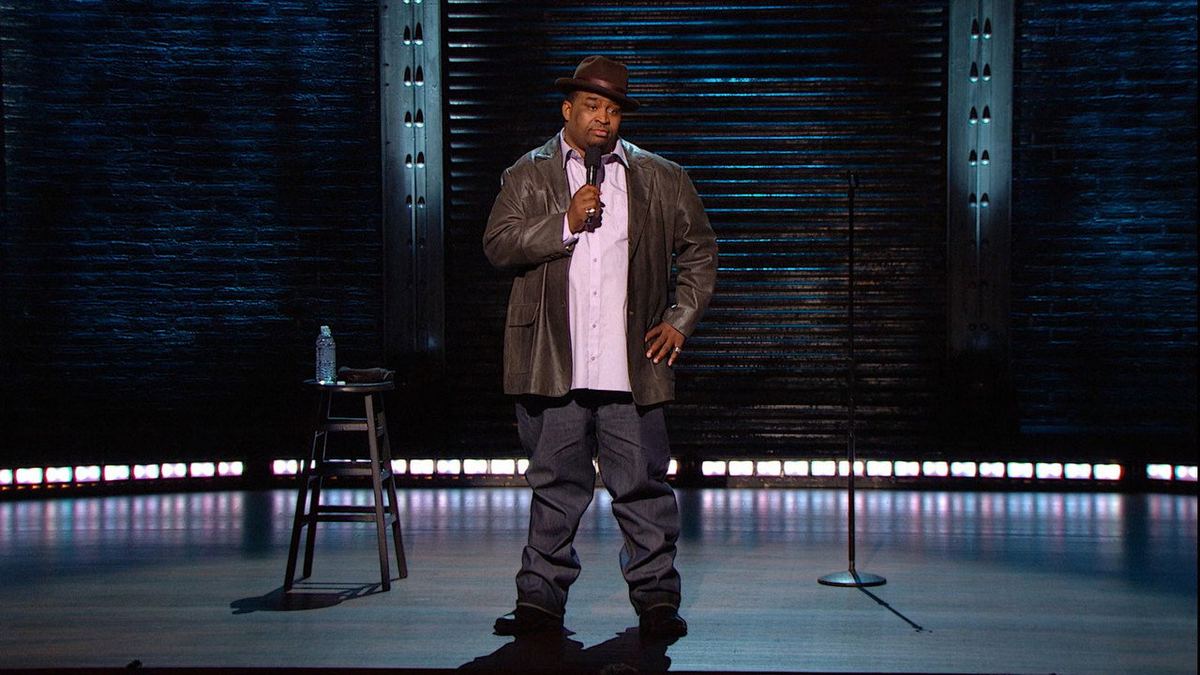
Ask almost any legendary stand-up comic of the 21st century—from Bill Burr and Dave Chappelle to Chris Rock, Marc Maron, and Colin Quinn—who the most terrifyingly brilliant performer they ever witnessed was, and the answer is unanimous: comedian Patrice O’Neal.
In a craft often defined by tightly scripted setups, rehearsed pauses, and carefully calibrated punchlines, Patrice worked like a master jazz improviser. Standing six-foot-four and commanding the stage in a fedora and leather jacket, he did not merely tell jokes; he conducted public psychological experiments in real time.
More than a decade after his untimely passing in November 2011 at age 41, the broader comedy world is still catching up to what Patrice was doing on stage. While peers achieved mainstream Hollywood stardom or commercial sitcom empires, Patrice pursued something far rarer: complete, uncompromised artistic honesty.
Here is an in-depth examination of why comedian Patrice O’Neal remains the benchmark for comedic intellect, the architecture behind his legendary special Elephant in the Room, and how his radical stagecraft permanently altered modern stand-up.
The Architecture of “The Line”: Living on the Wire
Most stand-up performers divide material into a binary: safe premises that keep the room comfortable, and provocative material that risks alienating the crowd. For comedian Patrice O’Neal, safety was an artistic failure.
Patrice famously described his comedic objective as finding “The Line”—that razor-thin boundary between acceptable social decorum and absolute conversational terror. Most comics either stay five feet behind the line to guarantee applause, or leap carelessly over it for cheap shock value. Patrice’s genius was deliberately balancing directly on top of the wire:
“I like to take people to the edge of what they’re comfortable with. If half the crowd is laughing and the other half is horrified, that’s where the funny lives. And then the goal is to make the horrified people laugh at their own discomfort.”
— Patrice O’Neal
This philosophy meant Patrice never chased unanimous applause. He often referred to laughter that came from a place of uneasy recognition as “righteous laughs.” If an audience groaned at a premise about gender dynamics, race, or human selfishness, Patrice wouldn’t retreat or apologize. Instead, he would lean on the mic stand, smile with mischievous warmth, and dismantle the room’s hypocrisies point by point until the groaners surrendered into convulsive laughter.
Elephant in the Room (2011): The Masterpiece
Filmed in late 2010 at the Skirball Center for the Performing Arts in New York City and broadcast on Comedy Central in February 2011, Elephant in the Room stands alongside Richard Pryor’s Live on the Sunset Strip (1982) and George Carlin’s Jammin’ in New York (1992) in the pantheon of solo comedy hours.
The Core Thesis: A fearless deconstruction of modern interpersonal relationships, societal hypocrisy, and the unspoken truths that dictate human attraction and emotional conflict.
What makes Elephant in the Room unique among modern specials featured in our overview of essential stand-up comedy specials is its utter lack of theatrical artifice:
- The Casual Opening: Patrice walks out slowly, adjusts the microphone, and immediately addresses an audience member in the front row about his shirt. There is no high-energy warm-up or theatrical cadence. He invites the audience into a living room conversation.
- Deconstruction of Male and Female Insecurities: Rather than resorting to hackneyed battle-of-the-sexes tropes, Patrice treats human relationships with clinical, philosophical rigor. He explores the transactional nature of affection, the desperation of codependency, and why people lie to keep peace.
- The Unapologetic Empathy: Even at his most audacious, Patrice possessed immense warmth. He never positioned himself as superior to his audience; he freely acknowledged his own flaws, physical health struggles, and moral contradictions.
Redefining Crowd Work as Sociological Inquiry
In contemporary stand-up and viral social video, “crowd work” has largely devolved into routine demographic polling (“Where are you guys from? What do you do for work?”) followed by rapid-fire heckler takedowns.
Comedian Patrice O’Neal approached the crowd with a radically different objective: sociological exploration.
When Patrice singled out an audience member, he wasn’t looking for an easy insult. He was searching for a real conversation. He would ask ordinary couples how long they had been together, how they met, and what they secretly resented about each other. Because he listened with genuine curiosity rather than rushing to a punchline, audiences opened up to him in ways they rarely would with anyone else.
As explored in our analysis of unscripted comedic timing and improvisation, the greatest comedic moments often arise when an artist surrenders total control of the room. Patrice mastered the art of prolonged silence—pausing for five or ten seconds, tilting his head, and letting the collective tension build until a single word broke the dam.
Television, The Office, and Tough Crowd
While Patrice was first and foremost a stage purist, his presence on screen left an indelible mark on television comedy:
- Lonny Collins (“Sea Monster”) in The Office: Recurring across several early seasons of NBC’s hit workplace mockumentary, Patrice portrayed Lonny, Dunder Mifflin’s warehouse worker whose blunt, no-nonsense realism stood in sharp contrast to Michael Scott’s needy corporate antics. Alongside Darryl Philbin—memorably brought to life in Craig Robinson’s legendary comedy performances—Patrice provided the grounded working-class skepticism that anchored the show’s brilliant deadpan cringe mechanics. When Michael Scott ruined warehouse equipment, Patrice’s furious, deadpan delivery (“Dammit Michael!”) punctured the sitcom reality with authentic blue-collar irritation.
- Colin Quinn’s Tough Crowd (Comedy Central): Across the early 2000s, Patrice was a pillar of Tough Crowd with Colin Quinn, trading unscripted verbal barbs with Greg Giraldo, Jim Norton, Nick Di Paolo, and Keith Robinson. It was a format built for Patrice’s lightning-fast intellect, proving he could out-think and out-argue any panel on topical politics and cultural trends.
- Radio and Long-Form Conversation: Outside of television, Patrice’s frequent appearances on New York’s Opie and Anthony radio show became legendary. For hours at a time, without any commercial constraints, Patrice dissected movies, relationships, music, and philosophy with a depth and comedic spontaneity that foresaw the modern podcast boom by a full decade.
The Comedian’s Comedian: An Enduring Legacy
Why does comedian Patrice O’Neal’s reputation only continue to grow with each passing year?
Because he was entirely honest. He refused to soften premises to appeal to television network executives or commercial brands. He walked away from major development deals when producers asked him to tone down his viewpoint. He prized the sanctity of the comedy club stage above celebrity status—regularly treating Greenwich Village’s Comedy Cellar (profiled in our guide to the best comedy clubs in America) as his personal artistic laboratory.
Comedians revere Patrice because he made the hardest thing in art look effortless. He proved that true comedic brilliance does not require high-concept theatricality or manic pacing—it requires relentless intellectual curiosity, fearless observation of human behavior, and the courage to stand on “The Line” without ever looking down.