
Cinema has grappled with the horror, brotherhood, and moral futility of armed conflict since the dawn of the moving image. Yet the greatest war films rarely celebrate militarism or wave nationalistic flags. As legendary French auteur François Truffaut famously argued, it is nearly impossible to make a true anti-war film because cinema inherently makes combat look exciting.
The true masterpieces of the genre, however, overcome Truffaut’s paradox. They do not glorify battle; they strip away romantic mythology to expose the sensory chaos, psychological disintegration, and profound human cost of organized slaughter. Whether through the claustrophobic dread of a submarine hull, the surreal madness of a jungle river journey, or the terrifying precision of modern urban combat, the best war movies of all time confront audiences with the darkest impulses of our species.
From legendary auteurs like Stanley Kubrick, Steven Spielberg, and Francis Ford Coppola to harrowing international visions from the Soviet Union and Japan, here is the definitive critical ranking of the 15 greatest war movies of all time.
15. 1917 (2019)
- Director: Sam Mendes
- Starring: George MacKay, Dean-Charles Chapman, Colin Firth, Benedict Cumberbatch
- The Conflict: World War I (Western Front)
- The Tactical Feat: Roger Deakins’ seamless continuous “single-shot” visual immersion
Inspired by stories told by director Sam Mendes’ grandfather, 1917 turns a desperate courier mission into a breathless, real-time nightmare. Two young British lance corporals (George MacKay and Dean-Charles Chapman) are ordered to cross deep into enemy territory to deliver an urgent message halting a doomed frontal assault, saving 1,600 men from a German ambush.
Working with legendary cinematographer Roger Deakins, Mendes crafts the illusion of one continuous, unbroken two-hour take. Far from a technical gimmick, the camera’s relentless forward momentum traps the viewer in the soldiers’ sensory panic: picking through corpse-strewn trenches, dodging snipers in ruined French villages illuminated by falling flares, and running perpendicular across a charging infantry line. It is a stunning triumph of immersive technical craft.
14. Black Hawk Down (2001)
- Director: Ridley Scott
- Starring: Josh Hartnett, Ewan McGregor, Eric Bana, Tom Sizemore, William Fichtner
- The Conflict: 1993 Battle of Mogadishu (Operation Gothic Serpent)
- The Tactical Feat: Relentless, kinetic modern urban combat choreography
Ridley Scott took Mark Bowden’s meticulous journalistic account of a disastrous U.S. military raid in Somalia and transformed it into cinema’s most intense, stripped-down tactical procedural. When two MH-60 Black Hawk helicopters are shot down by RPG fire in the crowded heart of Mogadishu, an elite force of Army Rangers and Delta Force operators find themselves surrounded and fighting for survival.
Scott avoids political sermonizing, focusing entirely on the ground-level physics of modern urban warfare: the deafening concussive blast of gunfire in tight alleyways, dust motes drifting through bullet-riddled rooms, and the agonizing struggle to retrieve fallen comrades under heavy fire. Powered by Pietro Scalia’s propulsive editing and Hans Zimmer’s driving score, it established the visual language of 21st-century combat cinema.
13. The Bridge on the River Kwai (1957)
- Director: David Lean
- Starring: Alec Guinness, William Holden, Jack Hawkins, Sessue Hayakawa
- The Conflict: World War II (Burma Railway)
- The Tactical Feat: The tragic absurdity of military pride and professional obsession
Before David Lean redefined cinematic scale with Lawrence of Arabia, he directed this searing psychological epic about the madness of military discipline. Imprisoned in a brutal Japanese POW camp in Burma, British Colonel Nicholson (Alec Guinness in an Oscar-winning turn) engages in a battle of wills with camp commander Colonel Saito (Sessue Hayakawa).
Nicholson refuses to let his officers perform manual labor under the Geneva Conventions, yet once he wins his moral standoff, he obsessively takes command of constructing a magnificent railway bridge for his captors to demonstrate British engineering superiority. Lean masterfully tightens the screws until Nicholson loses sight of the war entirely, culminating in the bridge’s explosive destruction and the immortal realization: “What have I done?”
12. Ran (1985)
- Director: Akira Kurosawa
- Starring: Tatsuya Nakadai, Akira Terao, Jinpachi Nezu, Mieko Harada
- The Conflict: 16th-Century Sengoku-Period Feudal Japan
- The Tactical Feat: Shakespearean tragedy elevated by colossal color-coded cavalry charges
At age 75, Japanese master Akira Kurosawa fused Shakespeare’s King Lear with Japanese historical lore to create his final, monumental epic. Warlord Hidetora Ichimonji (Tatsuya Nakadai) abdicates his power to divide his realm among his three sons, setting off a catastrophic cascade of dynastic greed, betrayal, and total destruction.
Ran (meaning “chaos” or “turmoil”) is visual majesty on an unmatched scale. Thousands of extras in vibrant primary-color armor clash across smoking green volcanic fields in practical battle sequences that digital effects can never replicate. The silent, horrific siege of the Third Castle—accompanied only by Toru Takemitsu’s mournful orchestral score as arrows rain down and flames consume the warlord’s mind—is cinema at its most operatic and devastating.
11. Das Boot (1981)
- Director: Wolfgang Petersen
- Starring: Jürgen Prochnow, Herbert Grönemeyer, Klaus Wennemann
- The Conflict: World War II (The Battle of the Atlantic)
- The Tactical Feat: The suffocating, claustrophobic reality of underwater mechanical warfare
Director Wolfgang Petersen’s six-hour director’s cut of Das Boot remains the definitive cinematic dissection of naval warfare. Following the crew of German submarine U-96 as they stalk Allied convoys in the stormy North Atlantic, the film strips away propaganda to reveal the grueling psychological reality of submarine service: weeks of mind-numbing boredom punctuated by moments of sheer, petrifying terror.
Petersen’s camera darts through narrow, greasy steel corridors reeking of diesel fumes, sweat, and mold. When Allied destroyers trap U-96 beneath the surface, the ping of active sonar and the metallic groan of the hull under crushing atmospheric pressure produce unbearable suspense. Jürgen Prochnow’s weathered Captain anchors the film’s tragic humanity, leading an exhausted crew of young men toward an inevitable, bitterly ironic destiny.
10. The Deer Hunter (1978)
- Director: Michael Cimino
- Starring: Robert De Niro, Christopher Walken, Meryl Streep, John Cazale
- The Conflict: The Vietnam War and the home-front fallout
- The Tactical Feat: Russian roulette as the metaphor for psychic mutilation
Sweeping five Academy Awards including Best Picture, Michael Cimino’s ambitious three-hour epic tracks three blue-collar Russian-American steelworkers from Clairton, Pennsylvania (Robert De Niro, Christopher Walken, John Savage) whose tight-knit community is shattered when they enlist to fight in Vietnam.
By dedicating its entire first hour to a joyous, lengthy Ukrainian wedding reception, Cimino establishes the communal warmth of small-town blue-collar life before plunging the characters into the horror of a Viet Cong river cage. The terrifying Russian roulette sequences—anchored by Christopher Walken’s Oscar-winning, haunting descent into catatonic detachment—remain etched into cinematic history. It is less about military maneuvers than the silent, agonizing aftermath of trauma on the American soul.
9. Paths of Glory (1957)
- Director: Stanley Kubrick
- Starring: Kirk Douglas, Adolphe Menjou, George Macready, Ralph Meeker
- The Conflict: World War I (French Army)
- The Tactical Feat: Tracking shots through trenches confronting institutional military corruption
Decades before Stanley Kubrick adapted horror classics in our ranking of the best Stephen King movies, he directed what many critics consider the greatest anti-war film ever made. When a vainglorious French general orders an impossible assault on an impregnable German position known as the “Anthill,” the mission inevitably collapses under heavy machine-gun fire.
To cover their own tactical incompetence, the high-command generals select three random soldiers to be court-martialed and executed for cowardice. Kirk Douglas gives a blistering, moral performance as Colonel Dax, the defense attorney fighting a rigged military tribunal. Kubrick’s celebrated trench tracking shots glide through the claustrophobic mud, exposing the chilling truth that the soldiers’ deadliest enemies were not in the German bunkers, but dining in luxury châteaux behind French lines.
8. The Thin Red Line (1998)
- Director: Terrence Malick
- Starring: Jim Caviezel, Sean Penn, Nick Nolte, Elias Koteas, Woody Harrelson
- The Conflict: World War II (Battle of Guadalcanal)
- The Tactical Feat: Lyrical, philosophical poetry contrasting combat with nature’s majesty
Returning to directing after a twenty-year hiatus, Terrence Malick adapted James Jones’ autobiographical novel into a sweeping, contemplative poem. While competing directly with Steven Spielberg’s Saving Private Ryan in the autumn of 1998, Malick offered a radically different cinematic experience: war viewed through whispering interior monologues, shimmering blades of kunai grass, and the indifferent beauty of the Pacific jungle.
Nick Nolte gives a ferocious performance as the desperate, ambitious Lieutenant Colonel Tall, driving his men up Hill 210 regardless of casualties, while Jim Caviezel and Sean Penn debate the existence of spiritual grace in a world torn apart by violence. Hans Zimmer’s hypnotic score (“Journey to the Line”) carries the audience through an existential inquiry: “What is this war in the heart of nature? Why does nature vie with itself?”
7. Inglourious Basterds (2009)
- Director: Quentin Tarantino
- Starring: Brad Pitt, Christoph Waltz, Mélanie Laurent, Michael Fassbender, Diane Kruger
- The Conflict: World War II (Occupied France)
- The Tactical Feat: The cinematic rewriting of history through pure dialogue tension
Quentin Tarantino approached World War II not with reverent historical docudrama, but as a cathartic, operatic spaghetti-Western revenge fantasy. Splitting the narrative between a Jewish-American commando squad led by Lt. Aldo Raine (Brad Pitt) and Parisian cinema owner Shosanna Dreyfus (Mélanie Laurent), the film turns the power of cinema into the literal weapon that incinerates the Nazi regime.
Christoph Waltz won an Academy Award for his career-defining introduction as SS Colonel Hans Landa, the multilingual “Jew Hunter.” The opening farmhouse interrogation scene is twenty minutes of unbearable, masterclass suspense, conducted over glasses of milk and pipe tobacco. Tarantino weaponizes tension in subterranean taverns and Paris bistros, demonstrating that in war, a slip of the tongue or a misplaced finger gesture can be just as lethal as a heavy artillery shell.
6. Platoon (1986)
- Director: Oliver Stone
- Starring: Charlie Sheen, Willem Dafoe, Tom Berenger, Keith David, Forest Whitaker
- The Conflict: The Vietnam War (1967 Cambodian Border)
- The Tactical Feat: Direct personal combat experience translated onto the screen
Having served as an infantryman in Vietnam and earning a Purple Heart, Oliver Stone became the first combat veteran to direct a major Hollywood feature about the war. Platoon is grounded in sensory authenticity: the red clay mud, the sweltering heat, the relentless red ants, and the constant moral ambiguity of jungle warfare.
Charlie Sheen—who later brought his natural screen charisma to sports comedy in our ranking of the best baseball movies—stars as Chris Taylor, a naive college dropout caught in a spiritual tug-of-war between two veteran sergeants: the compassionate, humanistic Elias (Willem Dafoe) and the scarred, ruthless Barnes (Tom Berenger). Dafoe’s iconic death scene, falling to his knees with arms outstretched toward the departing helicopters to the sorrowful strains of Samuel Barber’s Adagio for Strings, remains an immortal emblem of American cinema.
5. Full Metal Jacket (1987)
- Director: Stanley Kubrick
- Starring: R. Lee Ermey, Vincent D’Onofrio, Matthew Modine, Adam Baldwin
- The Conflict: The Vietnam War (Parris Island and the Tet Offensive)
- The Tactical Feat: Deconstructing the military assembly line that turns boys into killers
Stanley Kubrick split his 1987 Vietnam masterpiece into two stark, dialectical halves. The legendary first forty-five minutes at Parris Island Marine Corps boot camp is cinema’s most searing dissection of military conditioning. Real-life drill instructor R. Lee Ermey improvises torrents of creative, profane abuse, systematically stripping young recruits of their individuality until Private “Gomer Pyle” (a heartbreaking, terrifying Vincent D’Onofrio) snaps in the latrine.
The second half transitions to the surreal, burned-out industrial ruins of Hue City during the Tet Offensive, where Private Joker (Matthew Modine) confronts the cognitive dissonance of the war—wearing a peace sign on his lapel while scrawling “Born to Kill” on his helmet. Kubrick strips away jungle romanticism, revealing war as a sterile, absurd machine of institutional madness.
4. Come and See (1985)
- Director: Elem Klimov
- Starring: Aleksei Kravchenko, Olga Mironova, Liubomiras Laucevicius
- The Conflict: World War II (Nazi Occupation of Belarus)
- The Tactical Feat: The unsparing transformation of boyish fantasy into hallucinatory apocalypse
Soviet director Elem Klimov survived the Battle of Stalingrad as a child, and his final cinematic work, Come and See, is universally recognized as the most harrowing, uncompromising anti-war film ever made. Filmed chronologically in Belarus, the film tracks Flyora (Aleksei Kravchenko), a naive teenage boy who eagerly digs up a rifle to join the Soviet partisans, only to witness the systematic Nazi annihilation of over 600 Belarusian villages.
Klimov avoids conventional cinematic heroics, using steadycam photography, distorted ringing sound design, and live ammunition on set to create an escalating, sensory nightmare. Over the course of the film, Kravchenko’s face visibly ages decades, his youthful innocence hollowed out into traumatized shock. The barn burning sequence is almost unbearable in its historical horror, culminating in an unflinching declaration: war is not glory; it is the death of human soul.
3. Dunkirk (2017)
- Director: Christopher Nolan
- Starring: Fionn Whitehead, Mark Rylance, Tom Hardy, Kenneth Branagh, Cillian Murphy
- The Conflict: World War II (Operation Dynamo, 1940)
- The Tactical Feat: Temporal cross-cutting (the Mole, the Sea, the Air) driven by Hans Zimmer’s ticking stopwatch
Christopher Nolan stripped away conventional Hollywood melodrama—dispensing with elaborate backstories, romance, and dialogue—to create a pure, kinetic masterclass in survival suspense. Chronicling the evacuation of 330,000 Allied soldiers stranded on the beaches of northern France, Nolan weaves three non-linear timelines together: one week on land (the Mole), one day on the water (the civilian boats), and one hour in the air (the Spitfire dogfights).
Hoyte van Hoytema’s IMAX 70mm cinematography captures the vast, terrifying scale of vulnerability on the exposed beaches, while Hans Zimmer’s score—built around the literal ticking of Nolan’s pocket watch—maintains unbroken, white-knuckle tension. Anchored by Mark Rylance’s stoic civilian skipper and Tom Hardy’s gliding aerial heroics, Dunkirk celebrates survival itself as the ultimate victory.
2. Saving Private Ryan (1998)
- Director: Steven Spielberg
- Starring: Tom Hanks, Matt Damon, Tom Sizemore, Edward Burns, Barry Pepper
- The Conflict: World War II (Invasion of Normandy)
- The Tactical Feat: The visceral 24-minute Omaha Beach invasion that permanently altered cinema
Steven Spielberg’s 1998 masterpiece redefined the visual and auditory vocabulary of combat forever. The opening twenty-four minutes recreating the D-Day landings on Omaha Beach—shot with handheld cameras, desaturated colors, and a 45-degree shutter angle that rendered every flying drop of water and dirt particle in crisp, terrifying detail—was so viscerally authentic that Veterans Affairs set up special crisis hotlines for WWII survivors.
Yet the film’s greatness lies in its moral crucible. Captain John Miller (Tom Hanks in one of his most deeply empathetic performances) leads a squad of Rangers through enemy territory to locate a single paratrooper whose three brothers have already been killed in action. Spielberg forces his characters and the audience to grapple with an agonizing equation: is the life of one man worth risking the lives of eight others? When an elderly Ryan stands before Miller’s grave and asks his wife if he has lived a good life, Spielberg reminds us of the immense debt owed to ordinary boys who sacrificed their futures.
1. Apocalypse Now (1979)
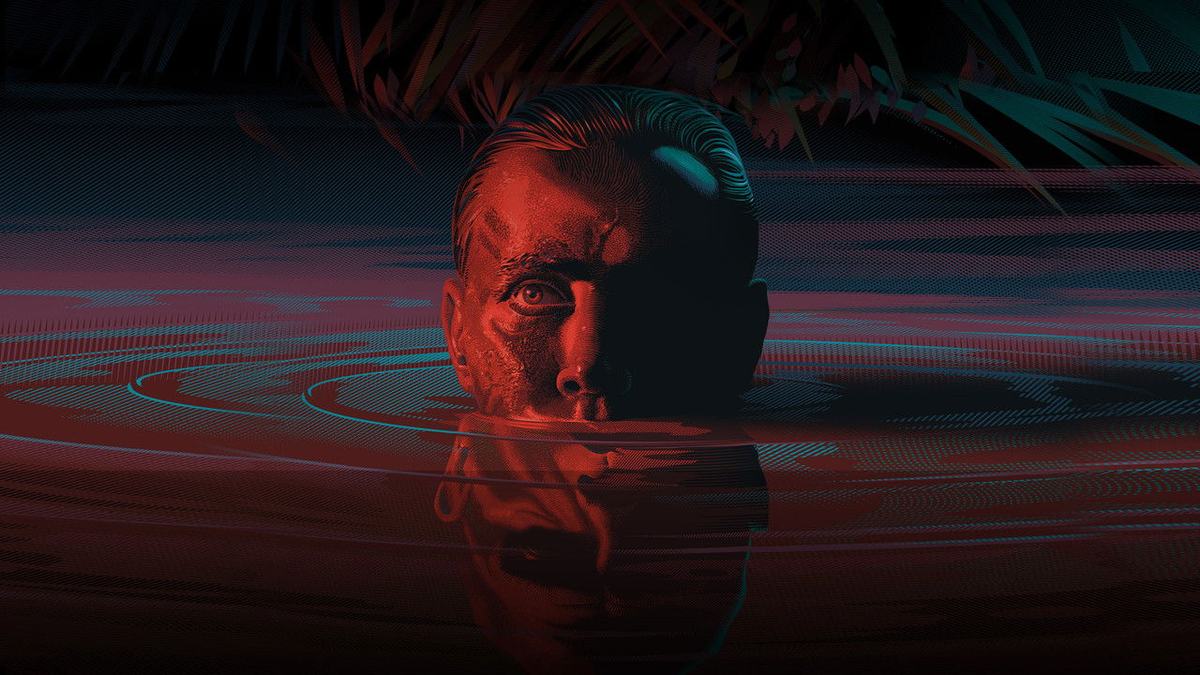
- Director: Francis Ford Coppola
- Starring: Martin Sheen, Marlon Brando, Robert Duvall, Dennis Hopper, Laurence Fishburne
- The Conflict: The Vietnam War
- The Tactical Feat: The hallucinatory, psychedelic descent into the heart of human darkness
There was never any contest. Francis Ford Coppola’s legendary production was itself an epic war: heart attacks, typhoons, nervous breakdowns, and soaring budgets that drove Coppola to the brink of madness. As Coppola famously declared at the Cannes Film Festival: “My film is not about Vietnam; it is Vietnam. It’s what it was really like. It was crazy. We were in the jungle, there were too many of us, we had access to too much money, too much equipment, and little by little we went insane.”
Transposing Joseph Conrad’s Heart of Darkness to the Vietnam War, the film tracks Captain Willard (Martin Sheen) as he journeys up the Nung River into Cambodia on a classified mission to assassinate rogue Colonel Walter E. Kurtz (Marlon Brando).
Every sequence is an indelible milestone of world cinema: the surreal air cavalry assault led by Robert Duvall’s surfboard-obsessed Kilgore (“I love the smell of napalm in the morning”) set to Wagner’s Ride of the Valkyries, the hallucinatory midnight chaos at the Do Lung bridge, and Kurtz’s shadowy compound echoing with poetic monologues on the necessity of horror. Apocalypse Now is not merely a war film; it is a monumental, hypnotic descent into the primal savagery of the human psyche.
The Moral Burden of War Cinema
The greatest war films do not offer easy answers or patriotic platitudes. They force us to look into the abyss and acknowledge that in modern mechanized warfare, the line between heroism and madness is razor-thin. By documenting the sacrifice of those who fought and the agony of those who suffered, cinema preserves a solemn warning across generations: that peace is fragile, precious, and must never be taken for granted.