
Few cultural artifacts have exerted as profound an influence on modern comedy as Warner Bros.’ Looney Tunes and Merrie Melodies. Born in the chaotic crucible of Termite Terrace—a ramshackle bungalow on the Warner lot where visionary directors like Tex Avery, Chuck Jones, Friz Freleng, and Bob Clampett redefined the medium—these animated shorts abandoned the saccharine pastoralism of Disney in favor of razor-sharp vaudeville, kinetic surrealism, and psychological warfare.
At the center of that creative explosion was Mel Blanc, “The Man of a Thousand Voices,” whose vocal agility gave life to dozens of distinct personalities, laying the groundwork for every ensemble cartoon that followed, from Futurama to The Simpsons. But what keeps these characters immortal after nearly a century is not merely their elastic anatomy or Acme explosives; it is their crystalline comedic archetypes.
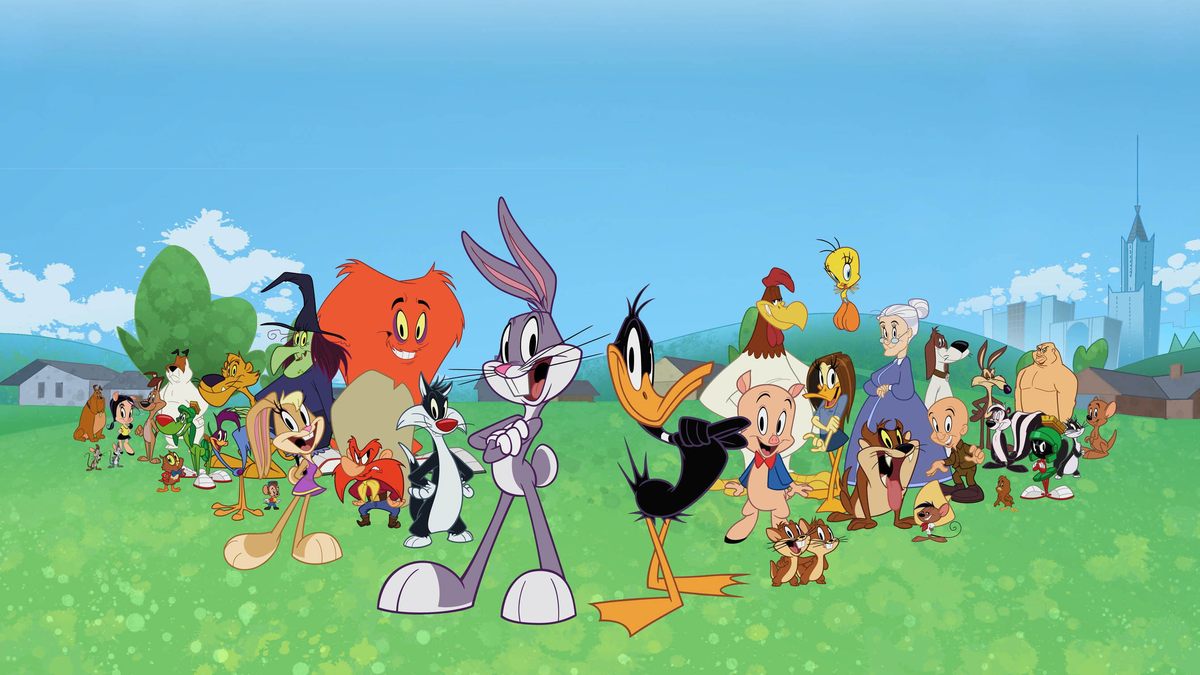
Whether driven by manic delusion, zen unflappability, or pure existential frustration, here are the 15 best Looney Tunes characters, ranked from great to transcendent.
15. Michigan J. Frog
- First Appearance: One Froggy Evening (1955)
- Key Director: Chuck Jones
- Defining Trait: World-class musical showman in private; inert amphibian in public
Michigan J. Frog appeared in precisely one classic Golden Age cartoon short, yet One Froggy Evening is universally cited by animators and film historians as one of the single most perfect cinematic exercises ever committed to celluloid. Directed by Chuck Jones with zero spoken dialogue outside of Michigan’s operatic repertoire (“Hello! Ma Baby”, “I’m Just Wild About Harry”), the frog is not an antagonist in the traditional sense; he is a force of cosmic retribution against human greed.
The comedy hinges on excruciating anticipation and immaculate timing. Whenever a down-on-his-luck construction worker tries to monetize the singing phenomenon before audiences, bank managers, or theatrical agents, Michigan instantly drops into a dull, throat-pulsing ribbit. It is ruthless, deadpan psychological torment disguised as high-stepping vaudeville.
14. Gossamer
- First Appearance: Hair-Raising Hare (1946)
- Key Director: Chuck Jones
- Defining Trait: An 8-foot-tall walking rectangle of red fur wearing tennis sneakers
Originally conceived as the unnamed monster henchman of Peter Lorre-inspired mad scientist Dr. Morbik, Gossamer represents the ultimate visual gag in character design: a towering, heart-shaped monolith of shaggy orange-red hair with glowing yellow eyes, clawed fingernails, and pristine white canvas sneakers.
What elevates Gossamer above mere monster parody is how easily he is disarmed by pure domestic absurdity. Bugs Bunny treats the terrifying creature not with panic, but with the casual familiarity of a fastidious Beverly Hills beautician giving him a manicure, giving him finger-waves, or giving him an impromptu haircut with clippers. Gossamer’s expressive shoulder slumps and childlike confusion make him an enduring cult favorite.
13. Speedy Gonzales
- First Appearance: Cat-Tails for Two (1953) / Redesigned in Speedy Gonzales (1955)
- Key Director: Friz Freleng
- Defining Trait: “The Fastest Mouse in all Mexico”
While modern cultural retrospectives have occasionally examined the character through differing lenses, Speedy Gonzales remains one of the most beloved and celebrated cartoon figures across Latin America precisely because he is an unbeatable, quick-witted folk hero who routinely outsmarts tyrannical oppressors.
Sporting an oversized yellow sombrero and white peasant attire, Speedy’s humor flows from frictionless speed and triumphant camaraderie. Pairing him against Sylvester the Cat created a masterclass in kinetic slapstick: Sylvester meticulously builds complex traps, landmines, and ambushes, only for Speedy to streak through like an orange-and-white comet with a joyful shout of “¡Ándale! ¡Ándale! ¡Arriba! ¡Arriba!”, snatching cheese right out of the feline’s jaws before physics even registers his departure.
12. Pepé Le Pew
- First Appearance: Odor-able Kitty (1945)
- Key Director: Chuck Jones
- Defining Trait: Unshakable Gallic romantic delusion accompanied by lethal scent
Conceived by Chuck Jones and writer Michael Maltese as a parody of romantic leading men like Charles Boyer in Algiers, Pepé Le Pew is built around a single, immutable comic formula: a French striped skunk mistaken for an eligible suitor by an unfortunate black cat who accidentally acquires a white paint stripe down her spine (Penelope Pussycat).
The genius of Pepé lies in his blithe disregard for reality. While Penelope frantically claws at window frames, scrambles up drainpipes, and jumps into rivers to escape his catastrophic stench, Pepé bounds along behind her in a relaxed, rhythmic hop, murmuring ornate poetic flatteries. He does not run; he simply floats on the breeze of his own romantic destiny.
11. Tasmanian Devil (Taz)
- First Appearance: Devil May Hare (1954)
- Key Director: Robert McKimson
- Defining Trait: A whirling vortex of appetite, growls, and pure centrifugal fury
Taz represents id stripped of all intellect. Where other Looney Tunes characters rely on dialogue, verbal parries, or engineered machinery, the Tasmanian Devil is a snarling, spinning tornado that eats rocks, trees, shotguns, and steamrollers without breaking stride.
Warner Bros. studio head Jack Warner initially ordered Taz retired after his debut, finding the creature too grotesque and loud. But when theater audiences demanded more, Robert McKimson brought him back with brilliant comic refinement. Taz is comedy at its most primal: sheer elemental hunger continually baffled by Bugs Bunny’s urban cool, whether Bugs is disguising himself as a society lady, feeding Taz an inflatable rubber sheep, or turning him into a compliant poodle with music.
10. Sylvester the Cat
- First Appearance: Life with Feathers (1945)
- Key Director: Friz Freleng
- Defining Trait: Sputtering, spray-heavy theatrical lisp and perpetual victim of gravity
Sylvester J. Pussycat, Sr. is one of the greatest physical comedy canvases Mel Blanc and Friz Freleng ever constructed. While lesser cartoons treat predatory cats as cruel villains, Sylvester is fundamentally an insecure, vaudevillian striver. His voice—a wet, slobbering spray of outraged dignity (“Sufferin’ succotash!”)—turned every sentence into a slapstick performance.
Whether matched against the deceptively sweet sadism of Tweety, the lightning velocity of Speedy Gonzales, or the eerie, kangaroo-sized innocence of Hippety Hopper (whom Sylvester continually mistakes for a giant mutant mouse), Sylvester absorbs punishment with Shakespearean gravitas. His slow-burn reactions after getting slammed by an iron or flattened by an umbrella are masterclasses in comedic spacing.
9. Tweety Bird
- First Appearance: A Tale of Two Kitties (1942)
- Key Director: Bob Clampett (origin) / Friz Freleng
- Defining Trait: Wide-eyed, baby-voiced sociopathy disguised as defenseless innocence
When Bob Clampett first introduced Tweety in 1942, the canary was pink, featherless, aggressive, and fundamentally feral. Under Friz Freleng, Tweety received his signature yellow feathers, giant blue eyes, and innocent baby lisp (“I tawt I taw a puddy tat!”), transforming him into one of the most effective stealth antagonists in animation history.
Tweety’s brilliance lies in the contrast between his cherubic appearance and his cold-blooded tactical competence. While Granny provides the domestic umbrella, Tweety himself is never actually in danger. He watches Sylvester’s elaborate engineering failures with cheerful detached amusement, occasionally supplying the gentle nudge that sends an anvil cascading down a chimney directly onto the cat’s skull.
8. Marvin the Martian
- First Appearance: Haredevil Hare (1948)
- Key Director: Chuck Jones
- Defining Trait: Soft-spoken, polite imperialist with a basketball head and a tennis skirt
In creating Marvin, Chuck Jones deliberately set out to subvert cartoon villain cliches. Where Yosemite Sam was loud, red-faced, and explosive, Marvin was quiet, formal, and unflappably courteous. With no mouth and only glowing round eyes peering out from beneath a Greek hoplite helmet, Marvin expressed himself entirely through posture, tiny hand gestures, and an eerie nasal politeness.
His grand life goal—to vaporize planet Earth with his Illudium Q-36 Explosive Space Modulator simply because “it obstructs my view of Venus”—is delivered with the casual matter-of-factness of an accountant noting an administrative inconvenience. Pairing that cosmic, soft-spoken nihilism against Bugs Bunny’s earthbound Bronx swagger produced some of the sharpest sci-fi satire of the atomic era.
7. Yosemite Sam
- First Appearance: Hare Trigger (1945)
- Key Director: Friz Freleng
- Defining Trait: Two feet tall, eight-foot red mustache, boiling with pure gunpowder rage
Friz Freleng created Yosemite Sam because he felt Elmer Fudd had become too soft and gullible to serve as a credible foil for Bugs Bunny. Freleng wanted an antagonist whose hatred was thermonuclear, whose volume was permanently locked at eleven, and who had zero capacity for compromise.
Sam is a comic miracle of compressed anger. Because his twin six-shooters are larger than his torso, every time he fires both guns simultaneously into the dirt, the recoil launches him six feet into the air. His wild, archaic curses (“racket-frackin’ fur-bearin’ varmint!”) and his inability to turn down an escalation make him Bugs’ most explosive opponent. Sam cannot see a lit fuse without trying to stomp it out, invariably blowing himself up in the process.
6. Elmer Fudd
- First Appearance: Elmer’s Candid Camera (1940)
- Key Director: Chuck Jones, Tex Avery, Bob Clampett
- Defining Trait: Mild-mannered hunter with a gentle rhotacism and catastrophic gullibility
Elmer Fudd is the ultimate straight man of the wilderness. Armed with a double-barrel shotgun and an earnest desire to be quiet (“Be vewy, vewy quiet, I’m hunting wabbits”), Elmer represents civilian society wandering into an avant-garde theater of the absurd and getting his hat shredded.
His central role in the immortal “Hunting Trilogy” (Rabbit Fire, Rabbit Seasoning, and Duck! Rabbit, Duck!) gave comedy some of its finest wordplay. While Bugs and Daffy engage in breathless linguistic judo, Elmer stands between them with his finger on the trigger, politely waiting for them to reach a consensus on whether it is Duck Season or Wabbit Season before shooting Daffy point-blank in the bill. Arthur Davis and Chuck Jones took Elmer to operatic heights in What’s Opera, Doc? (1957), proving that Fudd’s earnest yearning could elevate cartoon slapstick into genuine Wagnerian art.
5. Foghorn Leghorn
- First Appearance: Walky Talky Hawky (1946)
- Key Director: Robert McKimson
- Defining Trait: Blustering, pontificating Southern rooster who cannot stop talking
Modelled directly on the popular 1940s radio character Senator Claghorn from The Fred Allen Show, Foghorn Leghorn is an unstoppable locomotive of unsolicited advice, condescending lectures, and Southern vernacular. Voiced by Mel Blanc with thunderous chest resonance, Foghorn is a man—or rather, a rooster—who loves the sound of his own voice far more than anything resembling reality.
What makes Foghorn so endlessly funny is the asymmetric warfare of the barnyard. Whether he is paddle-whacking the Barnyard Dawg with a 2x4 while the hound is chained up, or delivering rapid-fire lectures to Henery Hawk (“Look at me when I’m talkin’ to ya, boy!”), Foghorn’s own elaborate pranks invariably blow up in his face. Yet even with his tail feathers smoking, his rhetorical momentum never falters: “That’s a joke, son! A flag-waver! You’re built too low, the fast ones go right over ya!”
4. Porky Pig
- First Appearance: I Haven’t Got a Hat (1935)
- Key Director: Tex Avery, Bob Clampett, Frank Tashlin
- Defining Trait: The stuttering, mild-mannered anchor of sanity in a world gone mad
Porky Pig was Warner Bros.’ very first bankable cartoon superstar. Introduced in 1935, his gentle stammer (originally provided by real-life stutterer Joe Dougherty before Mel Blanc took over) and unassuming demeanor anchored the studio’s transition into high-energy comedy.
While Porky was initially cast as an everyman protagonist, his true comic destiny was revealed under Bob Clampett and Chuck Jones, who realized Porky was the greatest deadpan foil in modern animation. In masterpieces like Drip-Along Daffy, Rocket Squad, and Robin Hood Daffy, Porky plays the sensible companion to Daffy Duck’s raving megalomaniac. His quiet sighs, modest blue jacket, and polite refusal to engage in Daffy’s insanity make him the prototype for every comedy straight man from Bob Newhart to Martin Freeman. And his closing proclamation—“Th-th-th-that’s all, folks!”—remains the eternal heartbeat of the franchise.
3. Wile E. Coyote & The Road Runner
- First Appearance: Fast and Furry-ous (1949)
- Key Director: Chuck Jones
- Defining Trait: The tragic philosopher of gravity vs. the untroubled spirit of velocity
To rank Wile E. Coyote and the Road Runner separately would be an insult to the greatest structural comedy partnership in history. Conceived by Chuck Jones and writer Michael Maltese as a parody of traditional chase cartoons like Tom and Jerry, the Coyote-Road Runner shorts were governed by strict, almost mathematical rules: no dialogue, no exterior world, zero human intervention, and the Coyote could only ever be defeated by his own tools or the laws of physics.
Wile E. Coyote (Carnivorous Vulgaris) is an intellectual trapped in a body of comic failure. He doesn’t rely on brute animal instinct; he consults blueprints, calculates parabolic trajectories, and orders giant rubber bands, rocket skates, and catapults from the Acme Corporation.
The Road Runner (Acceleratii Incredibilis), meanwhile, is pure zen velocity, entirely oblivious to the malice directed at him. The humor exists in that terrifying, exquisite three-second beat where the Coyote runs off a cliff, realizes he is suspended in mid-air, looks into the camera with an expression of stoic resignation, and pulls out a tiny sign that reads “Help!” before plummeting into the canyon floor with a distant puff of dust.
2. Daffy Duck
- First Appearance: Porky’s Duck Hunt (1937)
- Key Director: Tex Avery, Bob Clampett, Chuck Jones
- Defining Trait: From early screwball lunatic to the ultimate petty, glory-starved id
Daffy Duck is the most psychologically complex character in the history of animation. When Tex Avery and Bob Clampett unveiled him in 1937, he was a revolutionary “screwball”—a wild, unpredictable manic sprite who bounced on his head across lakes, whooped with unrestrained glee, and broke every rule of narrative decorum.
But it was Chuck Jones who recognized Daffy’s true potential as humanity’s tragic mirror. Under Jones, Daffy became the living embodiment of petty ambition, neurotic jealousy, cowardice, and self-delusion. Where Bugs Bunny is the person we all wish we were, Daffy Duck is the person we secretly are when nobody is watching.
In Chuck Jones’ 1953 magnum opus Duck Amuck, Daffy engages in a direct meta-fictional war with the animator’s paintbrush, suffering existential indignities—having his sound erased, his background shifted from the Arctic to a volcano, and his body turned into a bizarre guitar-headed monstrosity—all while trying to retain his theatrical pride. His desperate vanity in Rabbit Fire and his pitiful desperation for applause make him the greatest tragicomic anti-hero in cinematic history.
1. Bugs Bunny
- First Appearance: A Wild Hare (1940)
- Key Director: Tex Avery, Chuck Jones, Friz Freleng, Bob Clampett
- Defining Trait: Unflappable Brooklyn cool, razor-sharp wit, and complete mastery of the universe
There was never any contest for the top spot. Bugs Bunny is not just the greatest Looney Tunes character; he is an indelible titan of American folklore, ranking alongside Mark Twain’s tricksters and Groucho Marx as a defining avatar of anti-authoritarian comedy.
First fully crystallized by Tex Avery in A Wild Hare (1940), Bugs transformed cartoon pacing forever. While earlier cartoon heroes scurried in terror from hunters and predators, Bugs casually leaned against Elmer Fudd’s shotgun barrel, chewed a crisp carrot, and asked a simple, legendary question: “What’s up, Doc?”
Bugs operates under one sacred narrative rule established by Chuck Jones: he never instigates violence. He is happy to sleep in his rabbit hole, listen to classical records, or take a wrong turn at Albuquerque. But the moment a pompous opera singer, an overbearing king, or an armed hunter violates his peace, Bugs delivers retribution with sublime, surgical elegance: “Of course you realize, this means war.”
From conducting opera with sheer eyebrow tension in Long-Haired Hare to donning valkyrie armor on a giant white horse in What’s Opera, Doc?, Bugs wields intelligence, disguise, and comedic timing like weapons. He is cool under fire, generous in victory, and effortlessly immortal—the absolute pinnacle of comedic genius.
Why the Looney Tunes Ensemble Outlasts Everything
The enduring power of Looney Tunes characters lies in their philosophical purity. While modern animated sitcoms often rely on topical references that age within months, the comic dynamics perfected at Termite Terrace are timeless. Greed (Daffy), hubris (Wile E. Coyote), pomposity (Foghorn Leghorn), and calm intelligence (Bugs) are universal human traits.
By treating animation not as a children’s distraction, but as a playground for sophisticated verbal parodies, classical orchestration (conducted by the legendary Carl Stalling), and flawless slapstick physics, the creators of Looney Tunes built a comedic legacy that continues to influence every generation of writers, animators, and performers that follows.